Nonprofit implementation catalyst · Coastal Ecuador
People building regenerative systems.
Building Carbon translates field research and education into coordinated programs across syntropic agroforestry, bamboo construction, and regenerative bioeconomies. We assemble the funding, partnerships, technical capacity, and operational resources required to move proven methods into application with communities across coastal Ecuador.
2027 Farmer Field School
Build the next phase of a farmer-led agroforestry network.
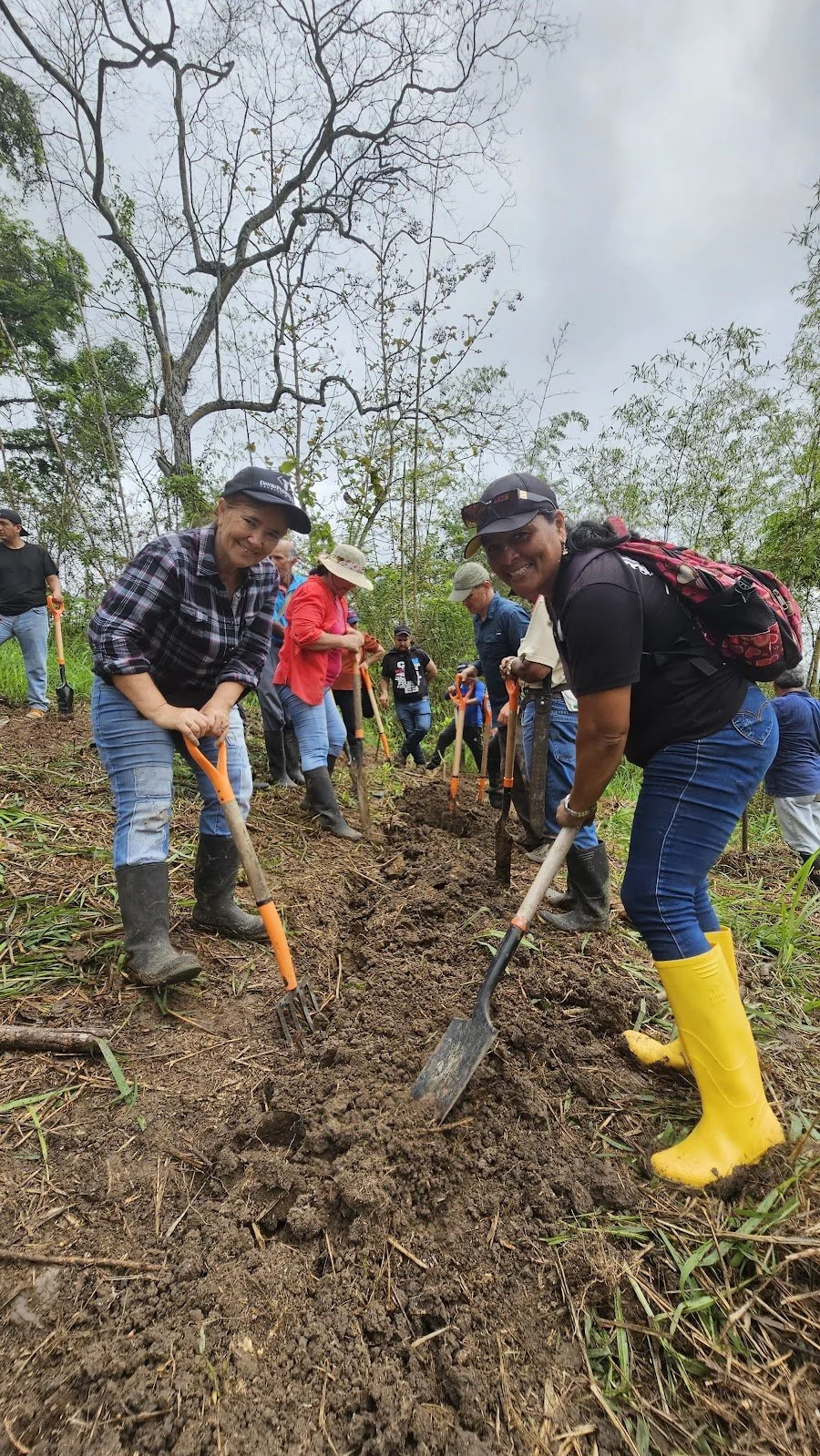
Across its first two years, the Farmer Field School built the foundation of a regional farmer-to-farmer learning network through hands-on training, participant-owned plots, farmer-promoter leadership, and continued technical support.
With full funding, the 2027 phase will bring new farmers into the program, expand successful agroforestry, strengthen peer leadership, and create a technical training pathway for rural youth.
Building Carbon is assembling an approximately $195,000 package through a proposed Rotary Global Grant, partner clubs, grants, and direct support. The funding covers the complete delivery structure: farmer-promoter leadership, field technicians, education, planting materials, irrigation, expanded demonstration systems, youth skills development, soil testing, monitoring, coordination, and financial reporting.
2025–2026 · Network to date
2027 · Proposed goals at full funding
Our mission
Connect the knowledge, capital, and technical capacity required to move regenerative agroforestry, bio-based construction, and locally rooted enterprise from possibility into practice.
Our approach
Rural transition depends on systems people can operate and adapt.
The goal is not one-time delivery.
Rural communities across coastal Ecuador are navigating depleted soils, increasingly variable rainfall, dependence on external inputs, limited technical infrastructure, and markets that often reward short-term returns over long-term resilience. Technical solutions alone do not change those conditions.
Effective transition requires field-based training, appropriate planting and building materials, water and production infrastructure, sustained technical accompaniment, local leadership, and evidence of what performs under real operating conditions. Building Carbon coordinates these elements into programs designed for long-term operation, evaluation, adaptation, and expansion.
Research · Education · Implementation
Distinct roles together in one field-based system.
Los Arboleros Farm, Regeneration Field Institute, and Building Carbon are distinct entities connected through a shared field-based system. The farm provides the land and long-term research context. RFI translates field knowledge into education and applied research. Building Carbon organizes the partnerships, capital, and technical capacity required for implementation. Each role strengthens and informs the others.
Los Arboleros Farm
An approximately 70-acre family-owned working farm and the headquarters of RFI in Manabí. Managed by Lucas Oshun, Los Arboleros provides the land, infrastructure, and operational continuity for long-term research, technical trials, and development across successional agroforestry, bamboo, ecological restoration, and diversified production.
Regeneration Field Institute
An immersive education and applied research institute preparing the next generation of regenerative leaders. RFI translates regenerative agriculture, ecological restoration, bio-based technologies, and environmental science into hands-on learning and collaborative inquiry for farmers, students, practitioners, researchers, and institutional partners.
Building Carbon
RFI’s sister nonprofit and the implementation catalyst within the system. Building Carbon assembles grant funding, Rotary partnerships, technical teams, materials, project coordination, financial management, and reporting to move field-developed approaches into coordinated implementation with communities and partners across coastal Ecuador.
Fields of work
Land. Materials. Local value.
Building Carbon works across regenerative landscapes, bio-based construction, and locally rooted enterprise. Each field combines applied research, practical education, technical development, workforce capability, and coordinated implementation rather than treating any single project as the complete story.
Regenerative Agroforestry
Farmer-led systems for productive landscapes.
Through the Farmer Field School, Building Carbon coordinates the resources behind regional learning groups, farmer-promoter leadership, planting materials, water infrastructure, field technicians, and performance monitoring. Together, these components support successional agroforestry integrating cacao with fruit, timber, and biomass species to rebuild soil function, diversify production, and strengthen climate resilience.
Explore agroforestry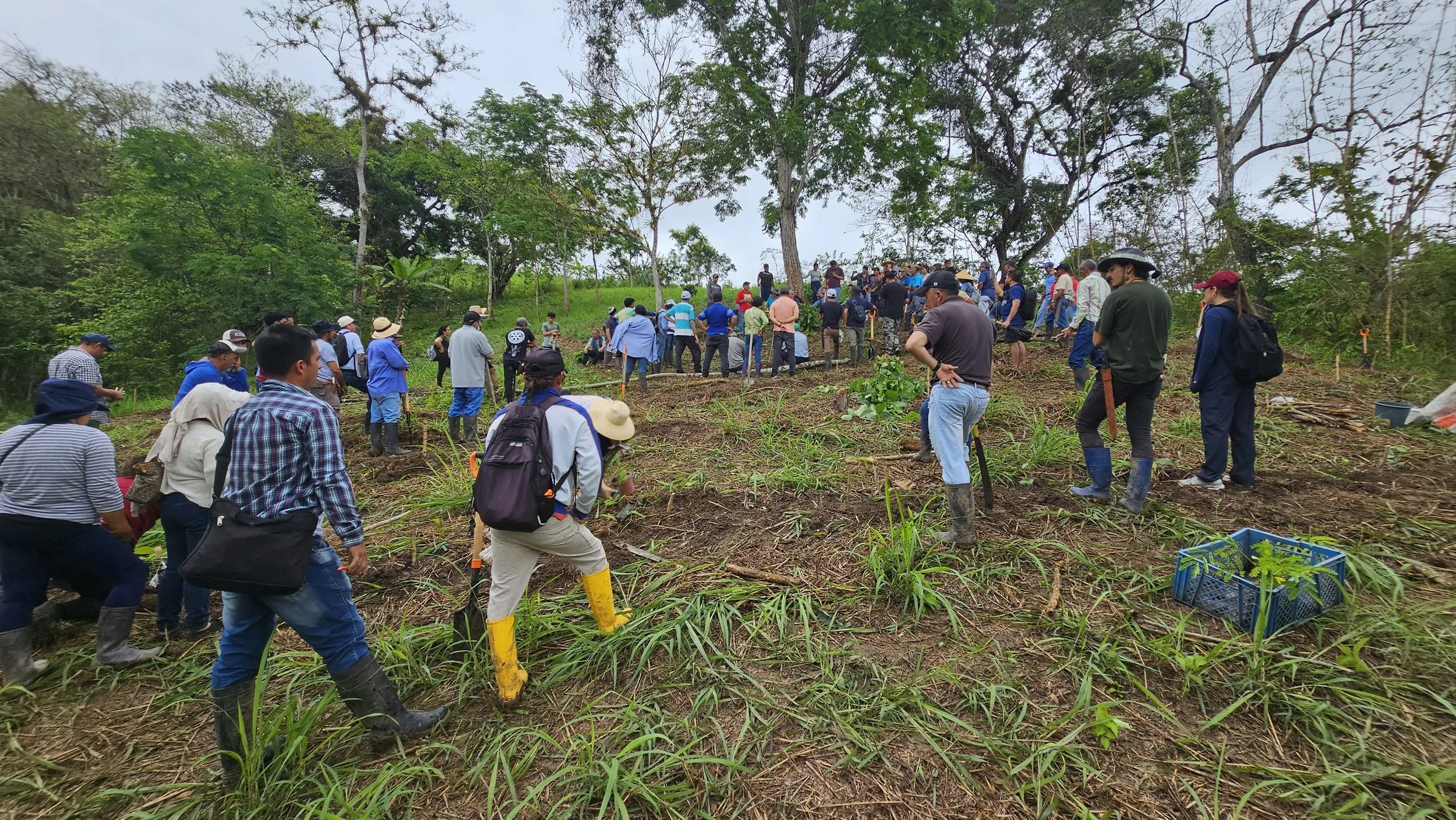
Bamboo Innovation
From biological resource to construction system.
Through MassBu and related construction pathways, Building Carbon connects bamboo cultivation and preservation with material research, structural testing, fabrication, technical training, project delivery, and regional supply-chain development. The objective is not to promote a material in isolation, but to build the coordinated capability required to use it dependably.
Explore bamboo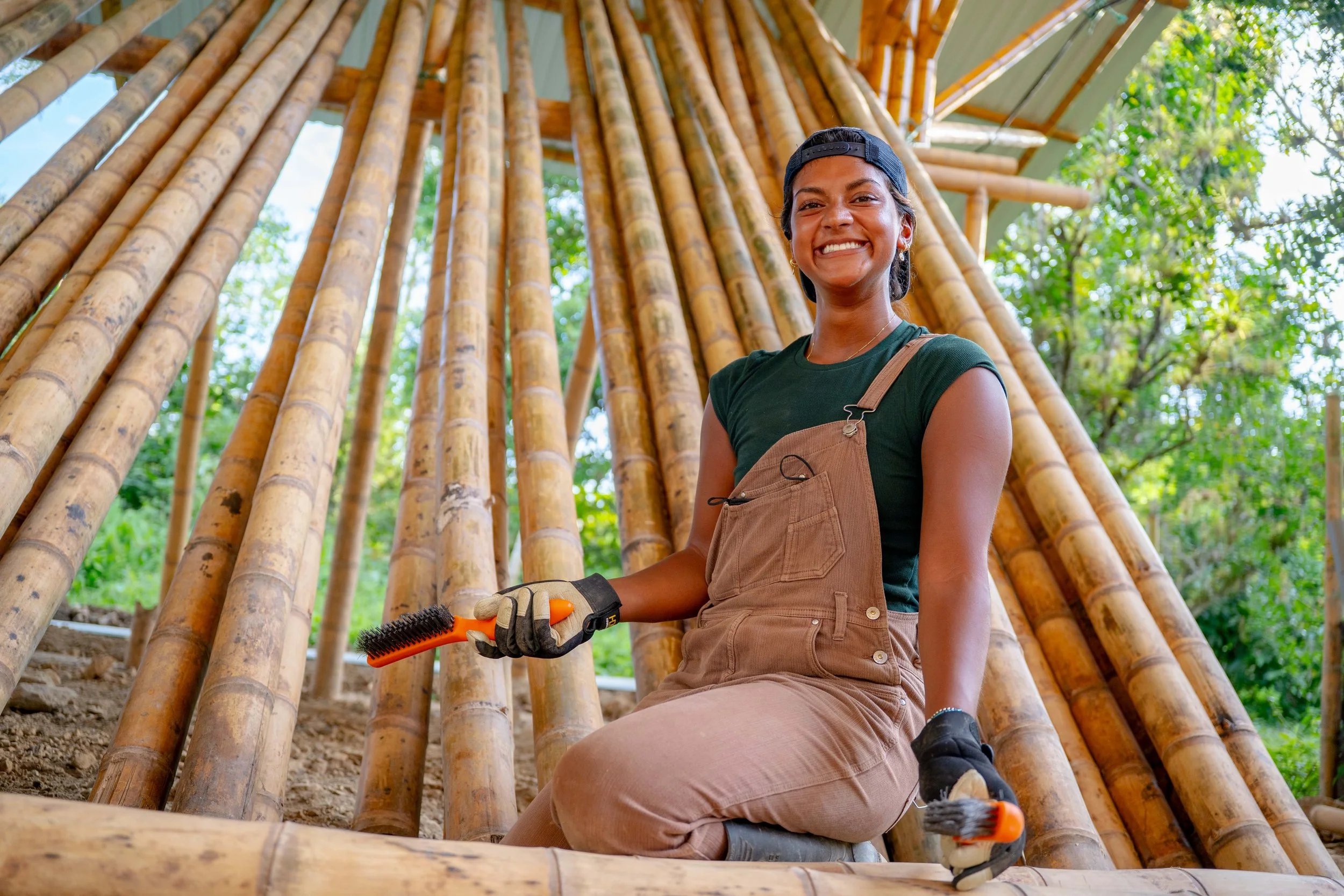
Bioeconomy Development
Value chains organized around people and place.
Building Carbon supports value-chain development connecting renewable biological resources with local processing, product development, workforce capability, enterprise formation, and market access. Through initiatives such as MassBu and Tierra Viva, the work examines how production can retain more knowledge, value, and decision-making capacity close to its source.
Explore bioeconomy