Bioeconomy · Living resources, local capability, and shared value
People, production, and place.
Building Carbon supports value chains in which knowledge, renewable biological resources, regional production, and market access strengthen livelihoods while sustaining the ecological foundations on which production depends.
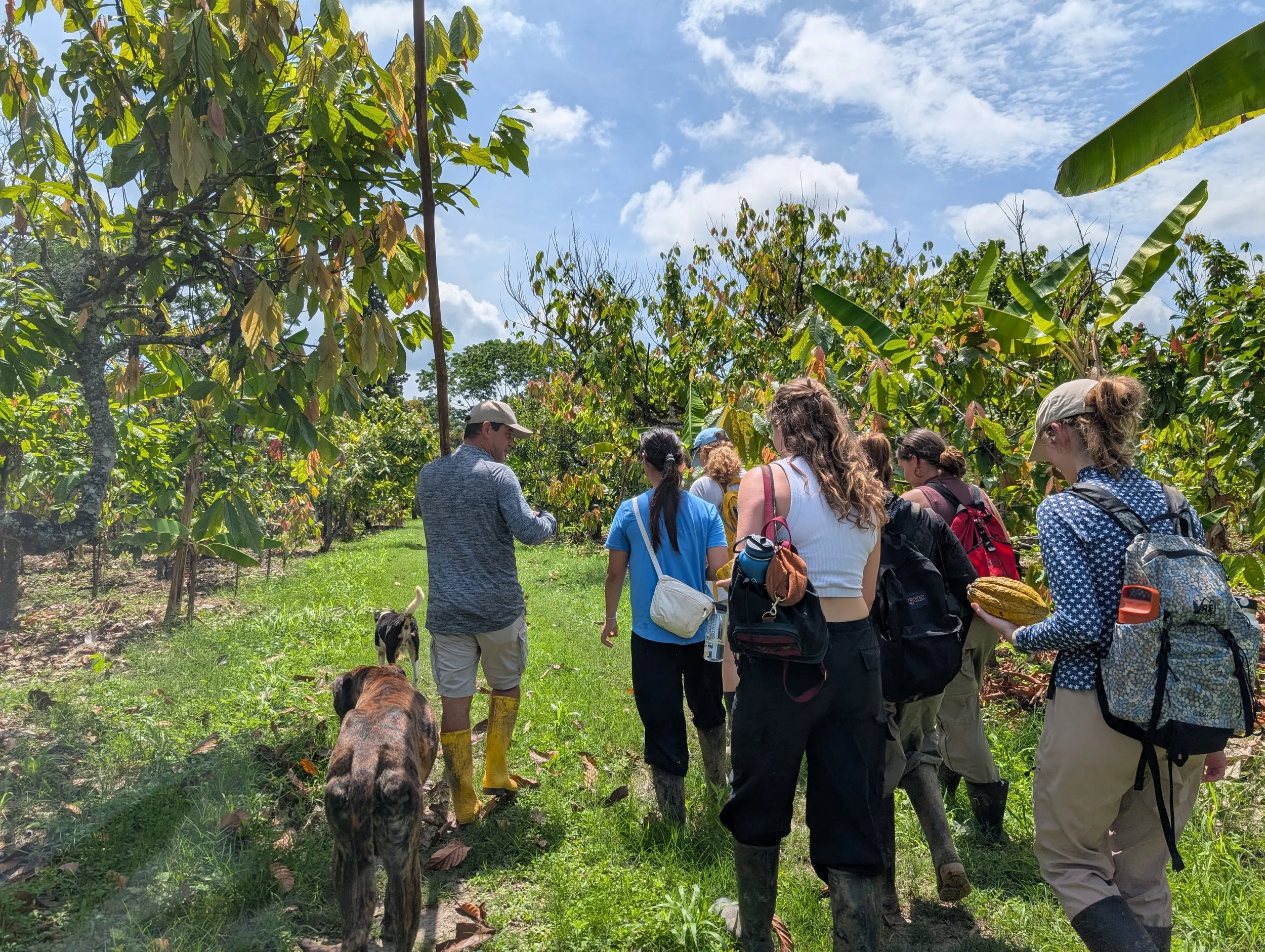
Production remains within ecological limits and regenerative land systems.
Knowledge, infrastructure, and technical control remain close to production.
Land stewards and workers share in decision-making, benefits, and ownership.
Scale is governed by evidence, rights, demand, and landscape performance.
01 · Working definition
Renewable is a starting condition, not an outcome.
A regenerative bioeconomy uses biological resources, knowledge, and production systems to meet human needs while rebuilding the ecological and social foundations on which that production depends.
Bamboo, cacao, timber, fiber, food, and biomass can still be produced through monoculture, weak labor conditions, extractive ownership, excessive material use, or high-impact processing. A biological feedstock does not make the complete value chain regenerative.
Building Carbon therefore evaluates land, rights, labor, energy, material efficiency, product life, markets, ownership, risk, and who retains value locally.
02 · The economic question
Markets already shape what happens on the land.
Prices, buyer requirements, infrastructure, credit, logistics, and bargaining power influence what farmers plant, how materials are processed, who can enter a value chain, and whether ecological practices survive financial pressure.
Price and quality
When markets reward volume without recognizing quality, traceability, or land management, regenerative production carries costs that the sale price may ignore.
Infrastructure
Processing, storage, transport, testing, working capital, and documentation determine whether a biological product can reach a higher-value market.
Negotiating position
Producer organization, information, lot separation, buyer relationships, and access to alternatives shape who holds leverage and who absorbs volatility.
Risk and control
Ecological, financial, and operational risk must be visible alongside revenue. Growth is not equitable when communities carry the risk while others control the value.
Ignoring markets does not remove their influence. The work is to redesign the relationships, infrastructure, and rules through which value moves.
03 · Operating principles
Six conditions for credible work.
These conditions guide project selection, initiative design, partnership structure, and public claims. They are evaluated together; no single environmental or economic attribute is sufficient.
Renewable
Regenerate the source.
Biological resources are renewed within ecological limits and appropriate production cycles.
Circular
Use less and retain value.
Materials remain in useful service; residues are reduced, recovered, or designed as inputs.
Place-based
Design for the territory.
Production responds to local ecology, culture, knowledge, infrastructure, capability, and demand.
Just
Make rights and benefits explicit.
Land stewards and workers participate in decisions, ownership, capability, and value distribution.
Durable
Justify the resource.
Products and infrastructure provide sufficient performance and service life for the biological inputs they consume.
Measured
Test the complete value chain.
Ecological, social, technical, and economic performance is evaluated across the operating life cycle.
04 · Applied initiative
Tierra Viva connects field quality with value retained near farmers.
Fine-flavor Nacional cacao can lose its identity and value when it enters undifferentiated commodity channels. Farmers may also lack fermentation, drying, quality control, traceability, working capital, and consistent access to buyers who recognize differentiated production.
Tierra Viva is developing a coordinated pathway across technical assistance, regenerative supply, post-harvest processing, lot separation, quality, traceability, logistics, and buyer relationships. Cacao is the initial application—not the definition of the wider bioeconomy field.
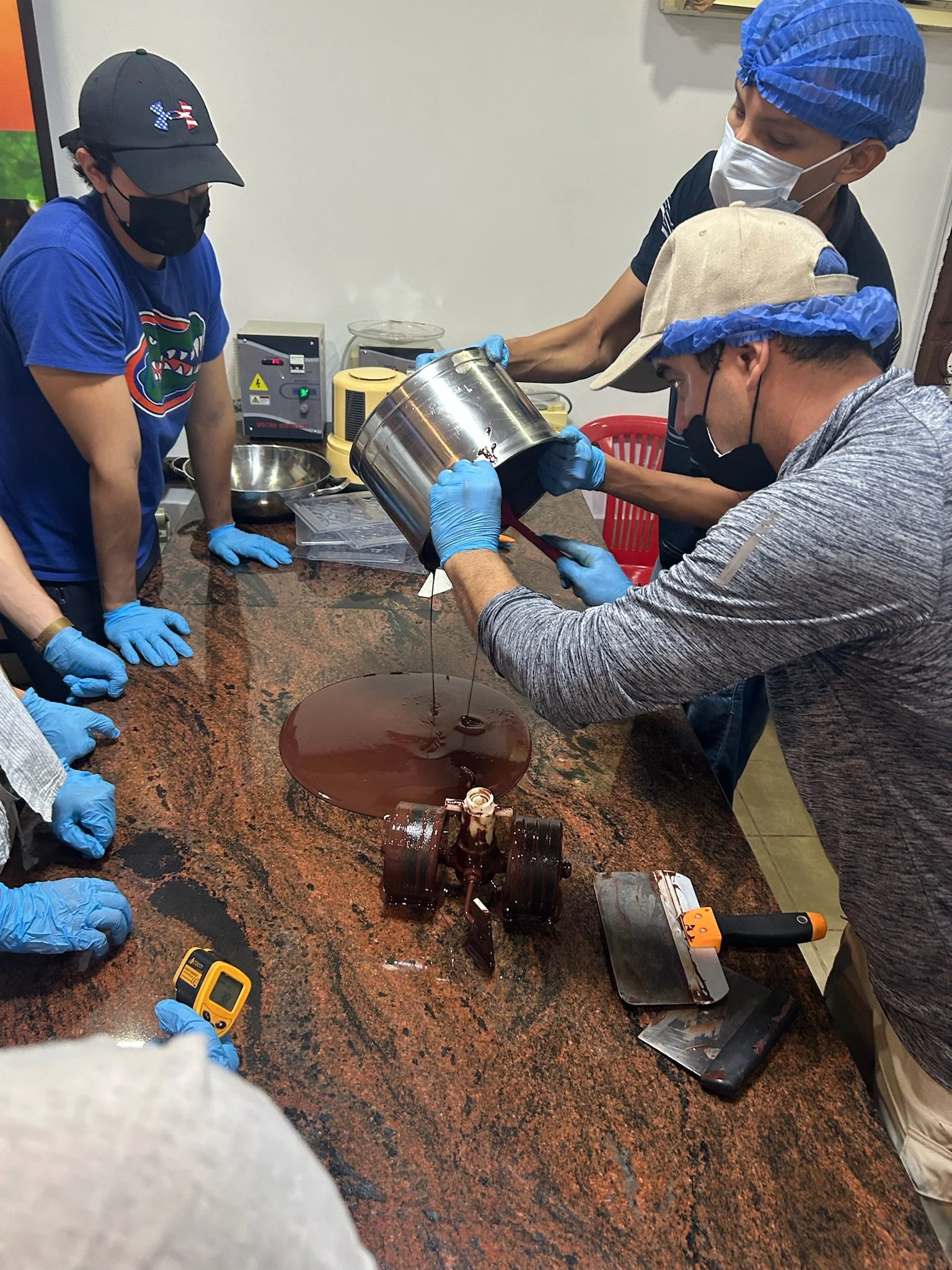
In 2026, the program record identifies a cacao processing center at Los Arboleros as a shared RFI, Building Carbon, and Tierra Viva project. The physical facility provides a place to test post-harvest methods, product development, operating costs, educational applications, and market assumptions.
Development status: Tierra Viva remains an initiative under development. Completed infrastructure and testing must be distinguished from commercial volume, farmer premiums, income change, and buyer commitments that have been independently verified.
Regenerative production
Diverse farm systems, technical accompaniment, farmer knowledge, genetics, and field management.
Collection and separation
Producer records, lot identity, harvest condition, transparent acceptance, and coordinated logistics.
Fermentation and drying
Controlled protocols, infrastructure, measurement, repeated trials, and documented handling.
Quality and traceability
Physical evaluation, sensory analysis, lot documentation, provenance, and production safeguards.
Buyer relationships
Samples, specifications, volume, delivery, contracts, price communication, and demonstrated demand.
Value distribution
Farmer payment, operating costs, reinvestment, ownership, risk, and the share retained regionally.
05 · Wider field of application
The umbrella is intentionally wider than cacao.
A regenerative bioeconomy is not a list of products. It is a framework for organizing production, knowledge, ownership, infrastructure, and ecological limits across different territories and material systems.
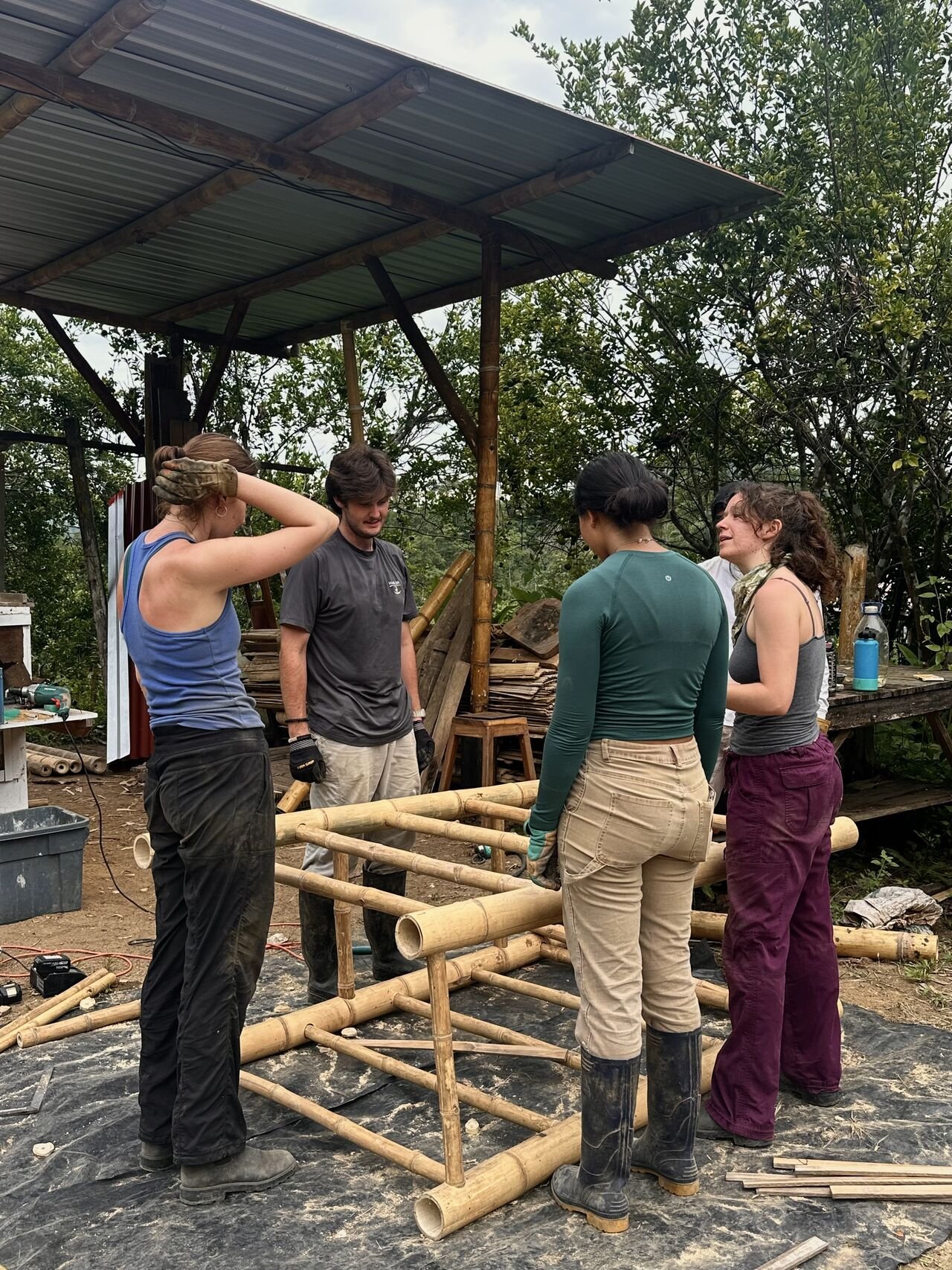
Bamboo production pathway
MassBu
The bioeconomy question begins where research moves toward cultivation, preservation, fabrication, licensing, supplier participation, skilled work, ownership, and value retained through regional production.
Explore the Bamboo system
Territorial partnership model
Forest economies
Fundación Pachamama’s Amazonian work connects community rights, biodiversity, producer organizations, value addition, institutional capacity, and market access across multiple biological products.
Partner record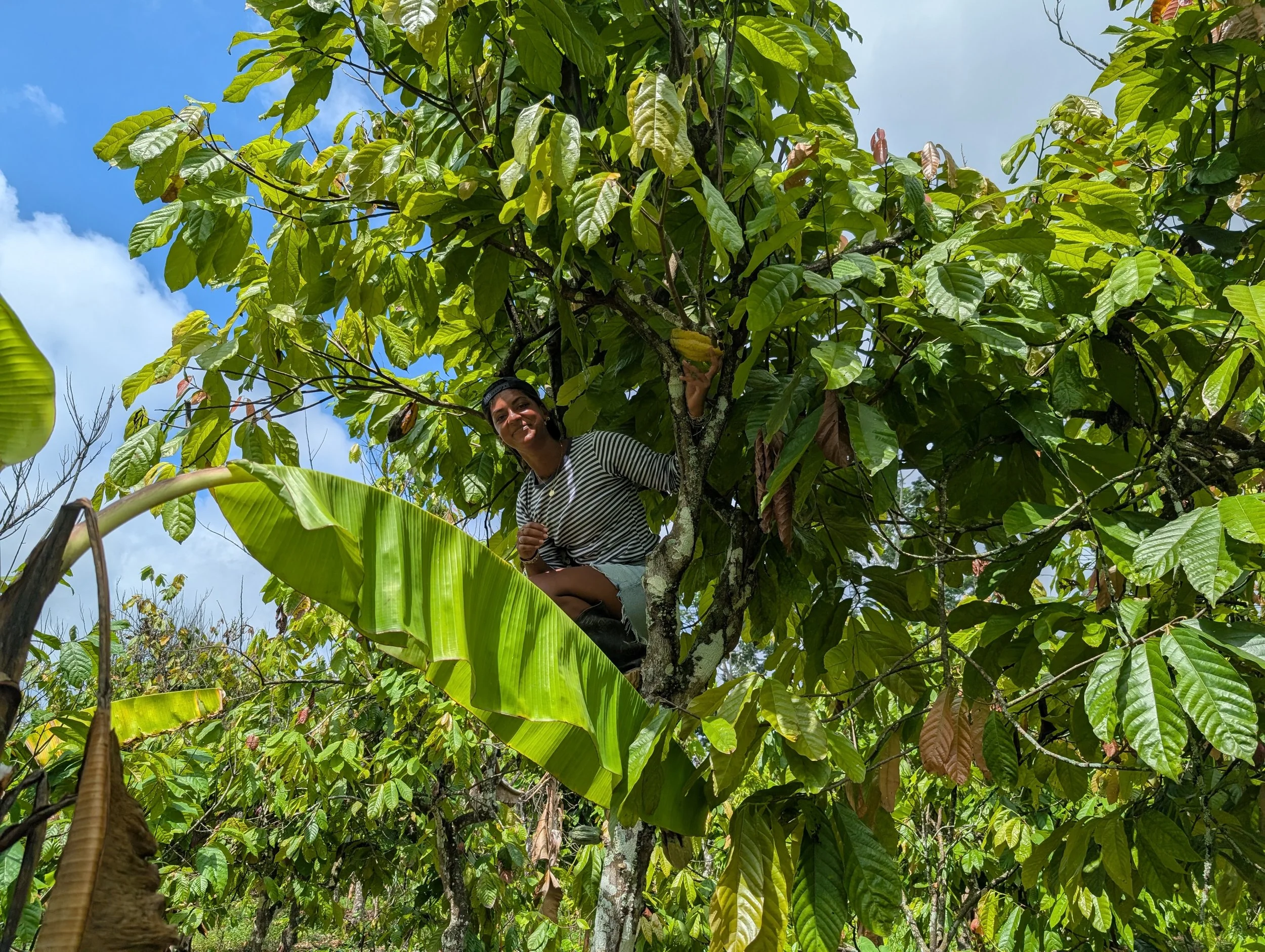
Diversified land systems
Beyond a single crop
Fruit, timber, spices, fibers, seed, food, and ecosystem functions can support multiple pathways—but demand must reinforce diversity rather than convert regenerative systems into new monocultures.
Explore Agroforestry06 · Workforce and local capability
Value chains operate through people.
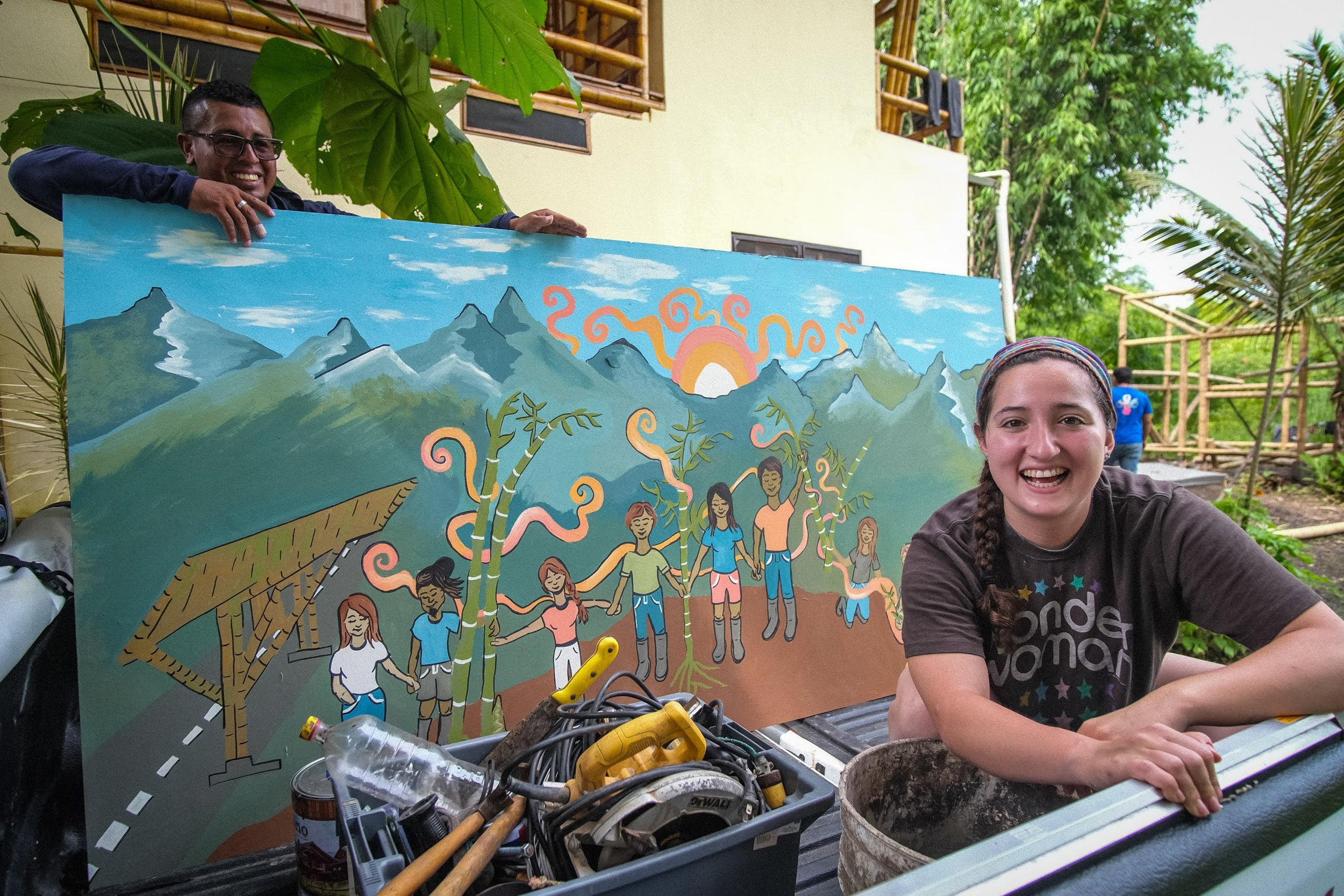
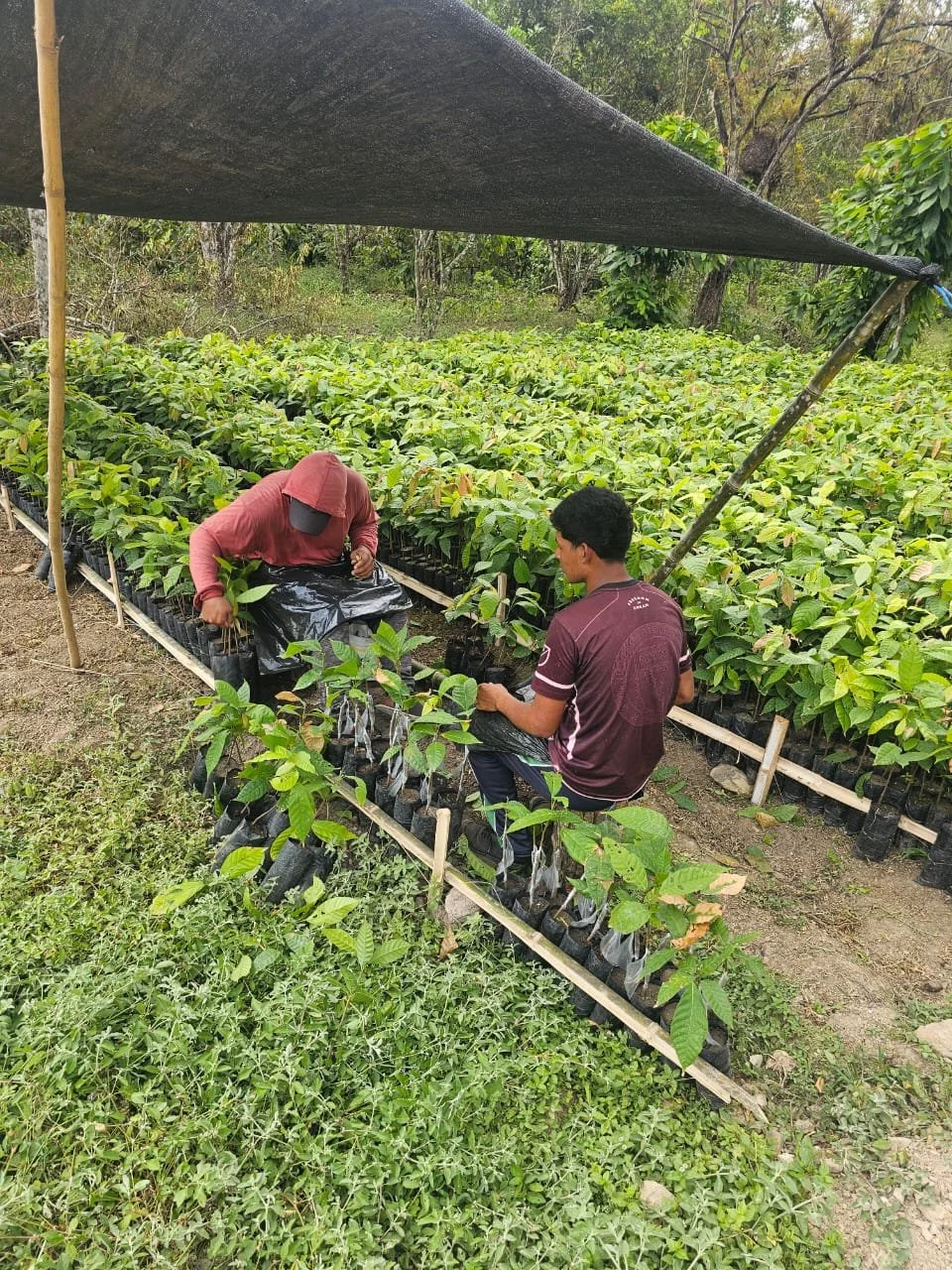
Regenerative production depends on interdisciplinary work distributed across farms, workshops, laboratories, associations, public institutions, logistics networks, and buyers. Durable local benefit requires more than short-term labor at the lowest-value stage.
Land stewards
System design, production, harvesting, ecological management, records, and long-term care.
Technical operators
Fermentation, drying, preservation, fabrication, equipment, maintenance, and process control.
Quality specialists
Sampling, measurement, sensory evaluation, material testing, grading, and traceability.
Designers and makers
Product development, packaging, components, useful service life, repair, and material efficiency.
Organizers and governors
Producer coordination, decision rights, agreements, finance, accountability, and conflict resolution.
Market and logistics teams
Demand, buyers, contracts, transport, export, inventory, communication, and delivery.
07 · Governance and ownership
The operating form follows the responsibility.
No organizational form is automatically regenerative. A cooperative can concentrate power; a nonprofit can exclude producers; a company can externalize costs; and a public program can fail when funding ends.
The appropriate structure depends on the work, capital, risk, decision rights, territorial relationships, and how value should be distributed.
Producer association or cooperative
Useful where producers need shared services, aggregation, infrastructure, bargaining power, democratic rules, and collective investment.
Community-owned initiative
Appropriate where territorial authority, collective rights, local governance, and community control must remain primary.
Nonprofit platform
Useful for public-benefit research, education, technical assistance, early infrastructure, grant administration, and transparent coordination.
Mission-driven company
Potentially appropriate for specialized operations, working capital, sales, employment, service delivery, and accountable commercial execution.
Public-community partnership
Necessary where infrastructure, land-use authority, public procurement, territorial planning, and long-term public responsibility intersect.
08 · Evidence and safeguards
Publish how value and risk move.
Bioeconomy claims become credible when the operating record shows who participates, what is produced, how resources are managed, where value is added, how benefits are distributed, who bears risk, and what changes as activity grows.
People
Participation and work
Roles, training, safety, work quality, compensation, decision rights, and access.
Production
Operating performance
Volume, quality, yield, loss, energy, logistics, cost, consistency, and delivery.
Landscape
Ecological conditions
Diversity, land use, soil, water, management, survival, traceability, and safeguards.
Value
Distribution and ownership
Prices, premiums, revenue, margin, reinvestment, ownership, finance, and bargaining power.
Risk
Responsibility under pressure
Climate, inventory, debt, rejection, price volatility, market concentration, and operational failure.
09 · Research agenda
Questions before slogans.
- Which activities should remain community-owned, cooperative, nonprofit, publicly operated, or privately managed?
- Where is value currently lost between land stewardship, processing, product development, and sale?
- What quality, volume, logistics, infrastructure, and working capital are required for each value chain to function?
- How can demand reinforce diverse landscapes rather than create another monoculture or extractive resource frontier?
- Which benefits remain local, who controls decisions, and who carries ecological, financial, and operational risk?
- What evidence is sufficient to describe a product, initiative, or value chain as regenerative?
10 · Work with the program
Bring a real value-chain or territorial problem.
Building Carbon works with producer groups, community organizations, researchers, public agencies, funders, technical partners, buyers, and operators when collaboration can strengthen local capability and make ecological and economic performance more accountable.
Land systems, biological resources, technical assistance, aggregation, and supply.
Processing, storage, equipment, quality control, traceability, and logistics.
Ownership, decision rights, producer organization, agreements, risk, and benefit distribution.
Demand, buyers, product development, working capital, grants, and implementation partnerships.