Agroforestry
Farmer-led landscape transition.
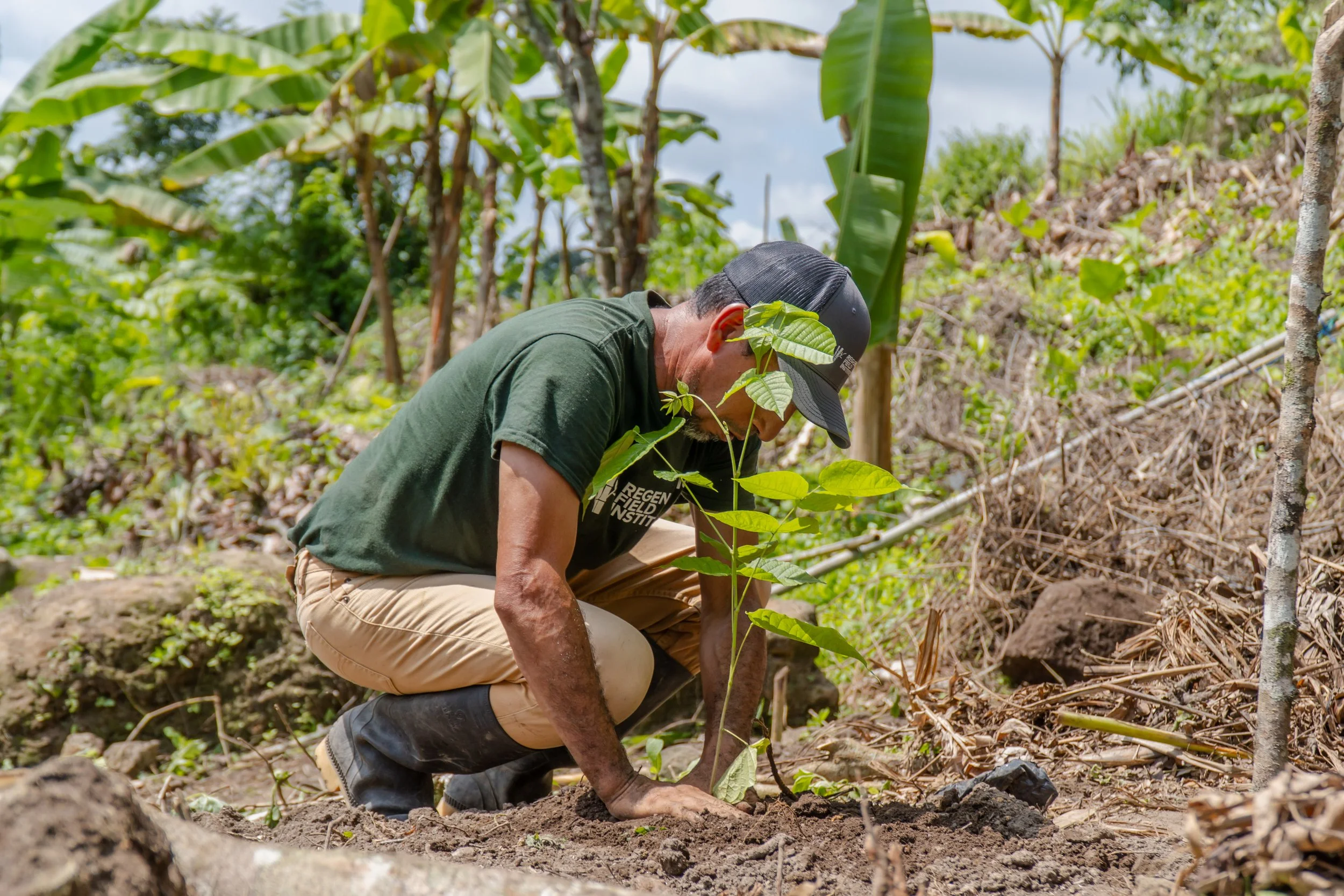
A decentralized Farmer Field School organized through participant-owned agroforestry, regional learning hubs, farmer-promoters, shared labor, monitoring, and sustained technical accompaniment.
 Up to 6 t CO₂
modeled annual sequestration potential per acre
 Biodiversity
supported through greater structural and species diversity
 Water retention
strengthened through continuous soil cover and improved infiltration
 Zero
Zeroagrochemical-input system design
 $3,000–$5,000
modeled diversified annual income potential per acre
These figures describe the potential carried forward from the original program model—not reported outcomes from young Farmer Field School plots. Ecological performance, production, and livelihood effects will be evaluated through continued monitoring as participant systems mature.
01 · Story and field development
Field-tested locally before wider application.
The Farmer Field School emerged from sustained work on degraded land—not from a grant-funded planting target. Since 2017, Regeneration Field Institute and Los Arboleros Farm have examined soil-restoration and successional agroforestry methods under the same seasonal pressures experienced by surrounding farms.
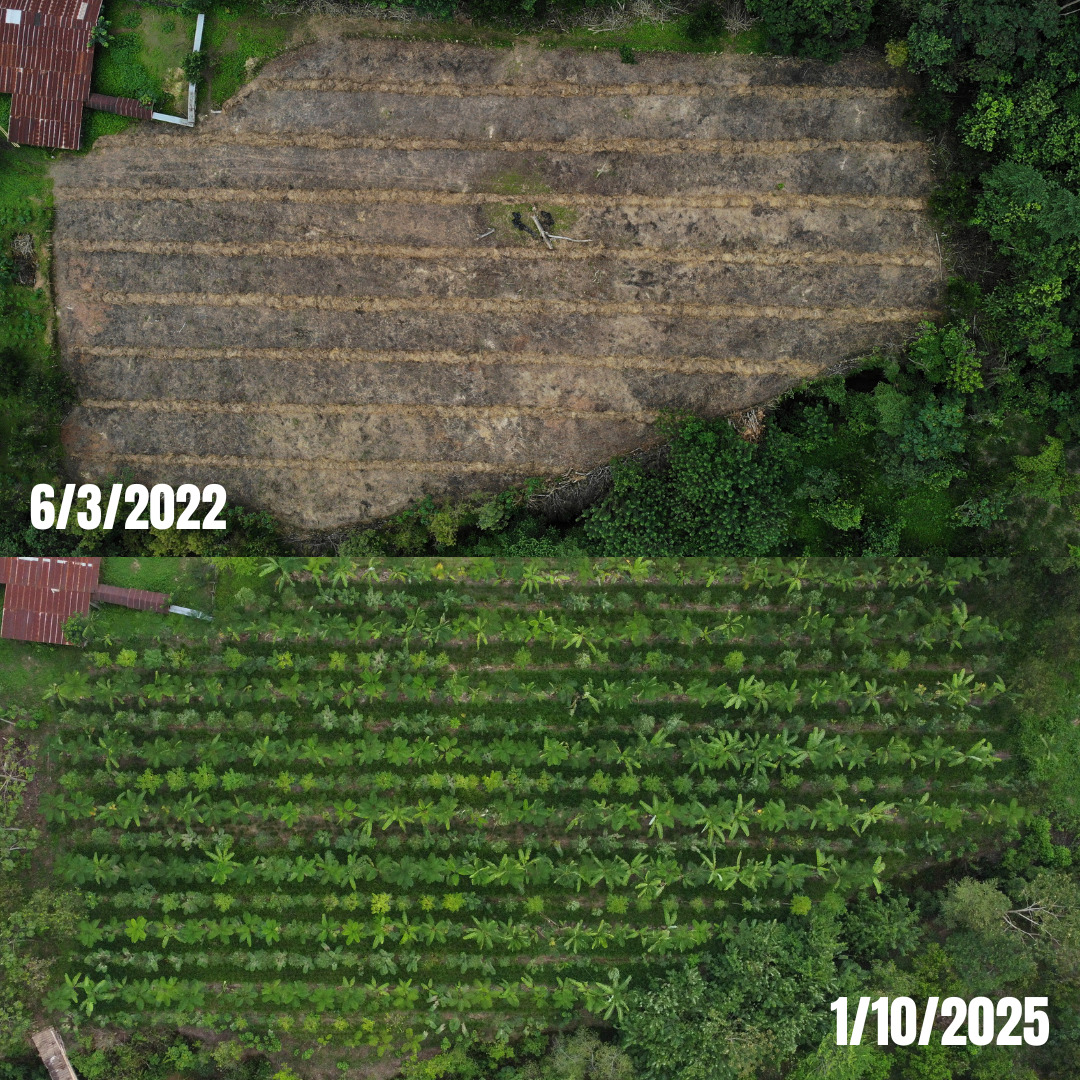
Los Arboleros is an approximately 70-acre working landscape established on land previously degraded by cattle production and agrochemical use. Its permanence allows planting design, species performance, ecological succession, biomass management, nursery protocols, water constraints, monitoring practices, and teaching sequences to be tested over time.
RFI translates that accumulated knowledge into applied research and practical education. Building Carbon assembles the financing, partnerships, technical teams, materials, coordination, and reporting required to move proven approaches into community-based implementation across coastal Ecuador.
Participant farms are not the first test site. They are the next application of methods developed under local conditions.
Test density, strata, succession, species functions, access, and management requirements before transfer.
Refine nursery production, seed sourcing, planting sequences, irrigation, tools, and transport logistics.
Observe pruning response, biomass cycling, soil cover, pest pressure, survival, and seasonal constraints.
Convert technical practice into repeatable exercises that farmers can operate, adapt, and teach.
2016
The rural challenge comes into focus.
Post-earthquake work reveals how degraded land, limited agricultural opportunity, and rural migration compound community vulnerability.
2017
Los Arboleros becomes the field base.
An approximately 70-acre farm in Manabí begins operating as a permanent site for regenerative agriculture, restoration, bamboo, and immersive education.
2017–2024
Methods are tested and refined.
Species combinations, ecological succession, biomass management, nursery practice, water access, monitoring, and instruction are developed under local conditions.
2025
The first Farmer Field School pilot begins.
Twenty-five farmers form five regional learning hubs and establish 30 × 30 meter practice plots through Rotary Global Grant GG2570132.
2026
The promoter network is established.
Eighty-five new farmers enter the implementation phase; ten pilot participants become farmer-promoters; and 95 plots are established or expanded through Global Grant GG2683091.
2027 · Proposed
The network deepens.
The proposed phase adds new participants, expands successful farms, increases promoter leadership, and pilots a technical training pathway for rural youth.
02 · Current focus
Deepen the network; do not simply enlarge it.
The 2025 pilot targets are complete. The proposed 2027 phase concentrates resources on new farmer entry, the expansion of successful plots, peer leadership, youth technical capability, and the infrastructure required to maintain quality across a larger network.
These are proposed operating targets at full funding and remain subject to final grant approval and confirmed partner commitments.
03 · Program architecture
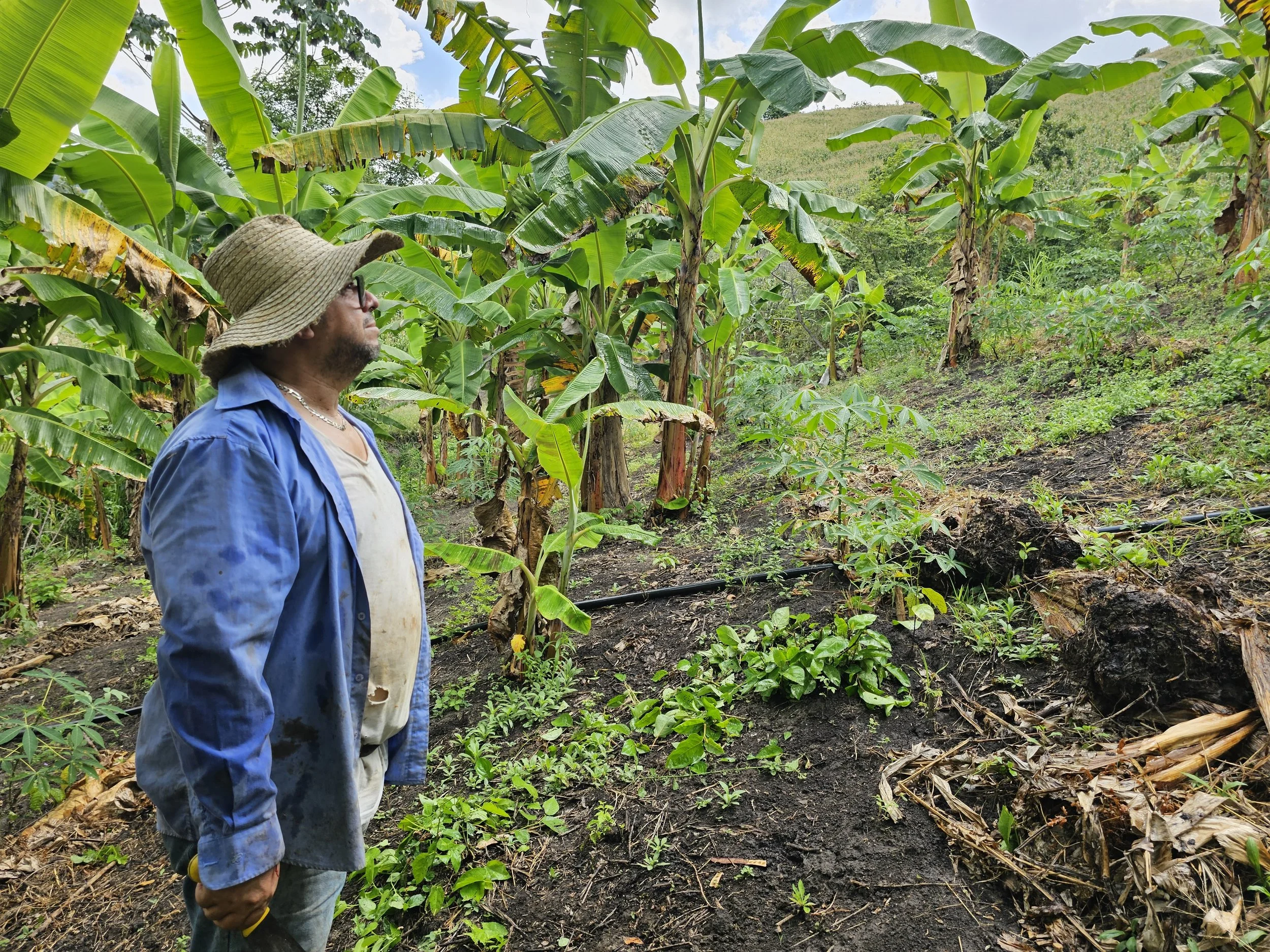
Learning is embedded in operating farms.
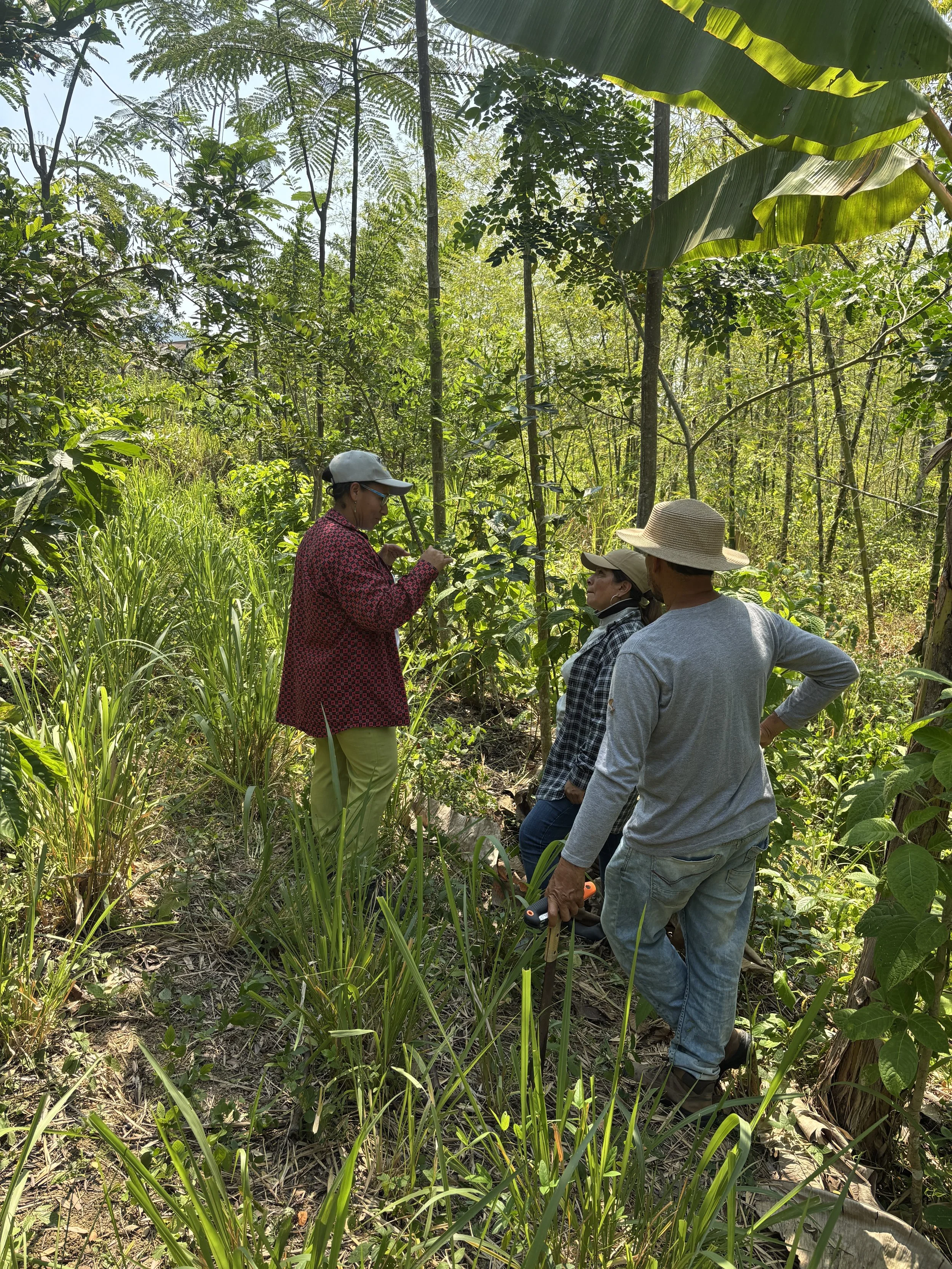
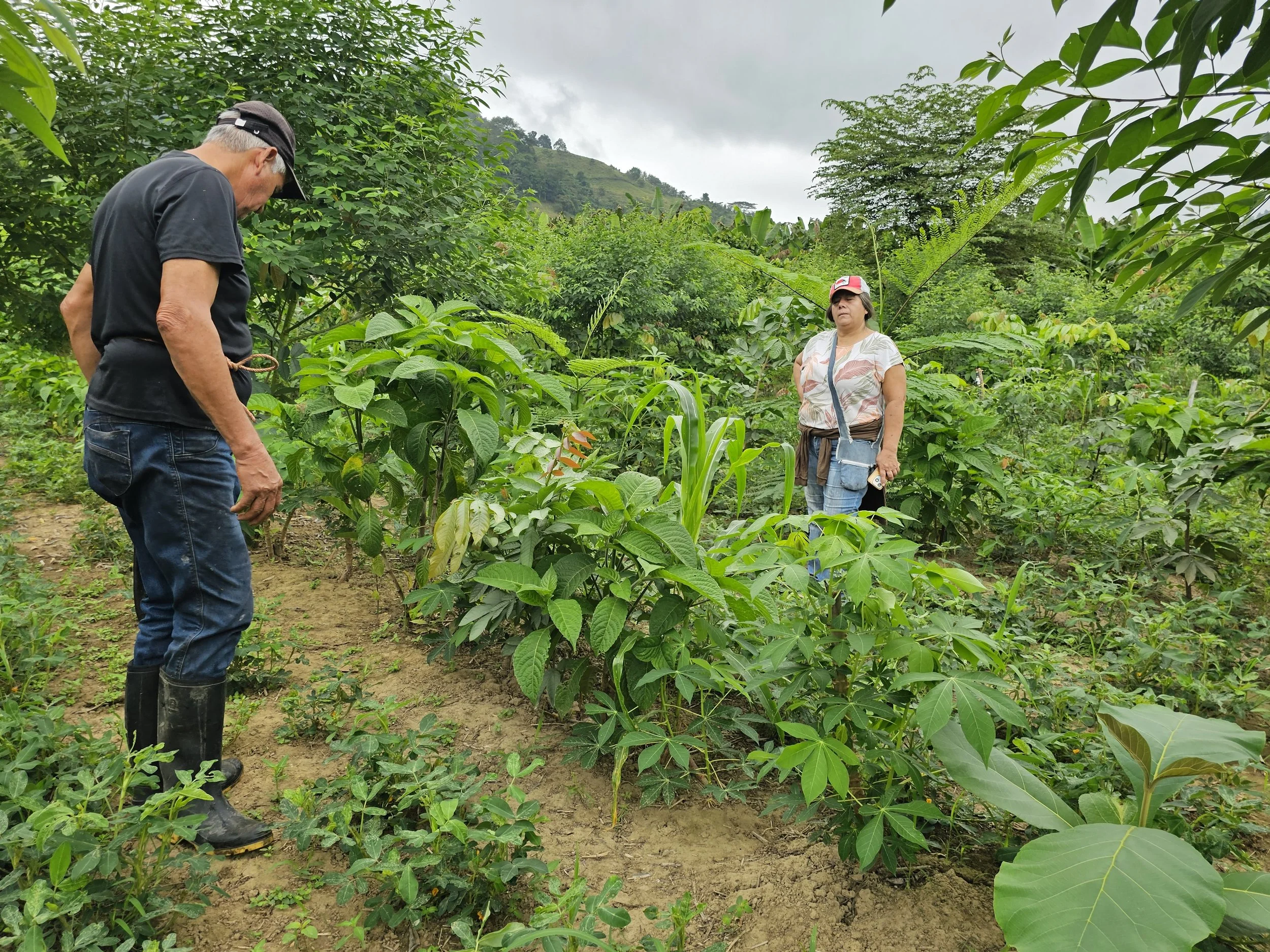
Farmers establish and manage their own agroforestry, compare performance across sites, diagnose problems with peers, and assume increasing responsibility for training and regional coordination.
Diverse 30 × 30 meter plots centered on fine-flavor cacao and integrated with fruit, timber, and biomass species.
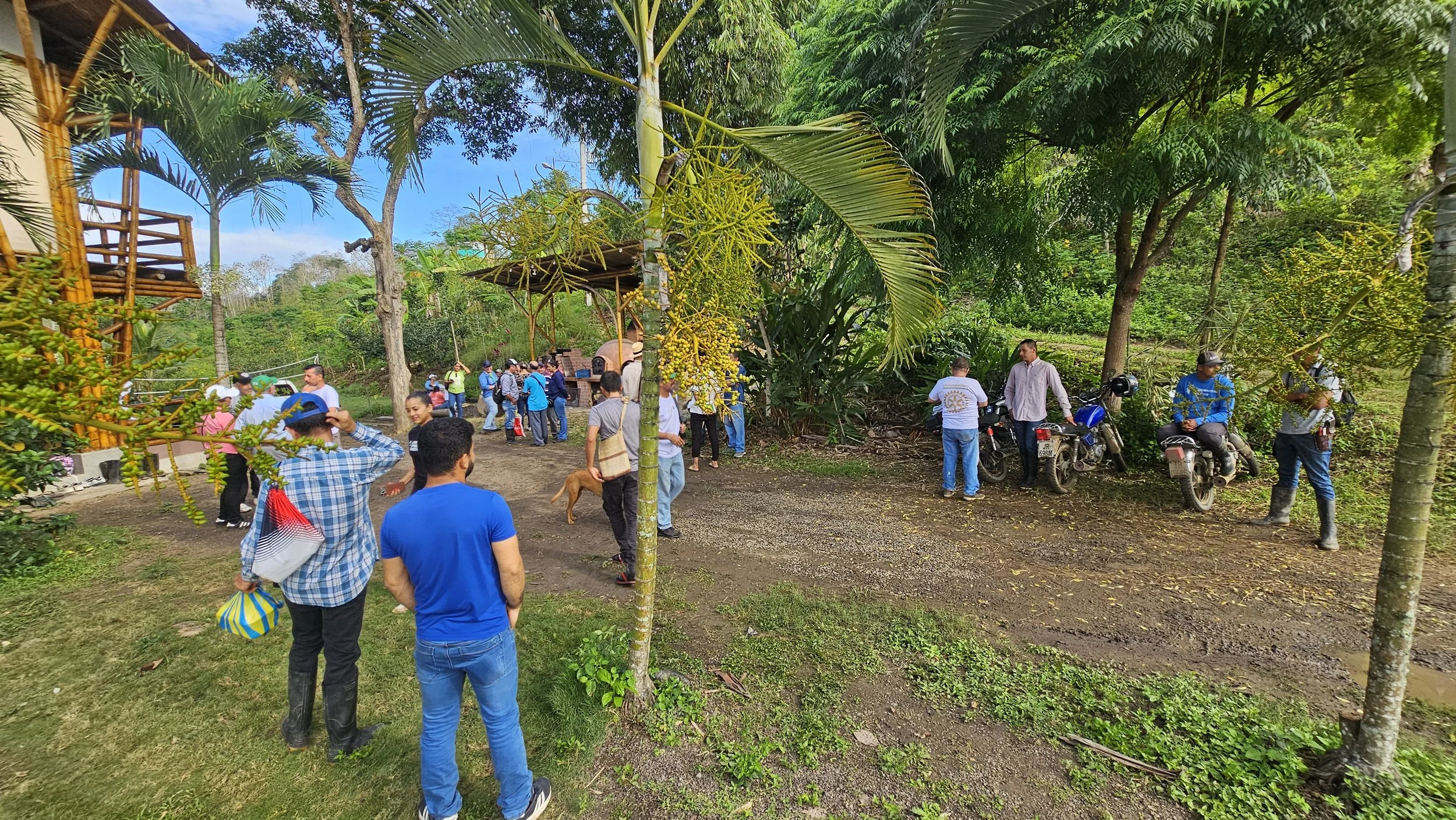
Clusters of neighboring farmers create the physical structure for repeated learning, shared labor, comparison, and mutual support.
Experienced participants convene groups, organize mingas, monitor plots, and mentor peers.
Survival, management, implementation quality, participation, and production constraints are tracked over time.
04 · Training methodology
Learn, establish, manage, and teach.
Training follows the operating cycle of agroforestry. Concepts are introduced through established landscapes, applied through supervised work, tested on participant-owned plots, and reinforced through repeated management, monitoring, and peer exchange.
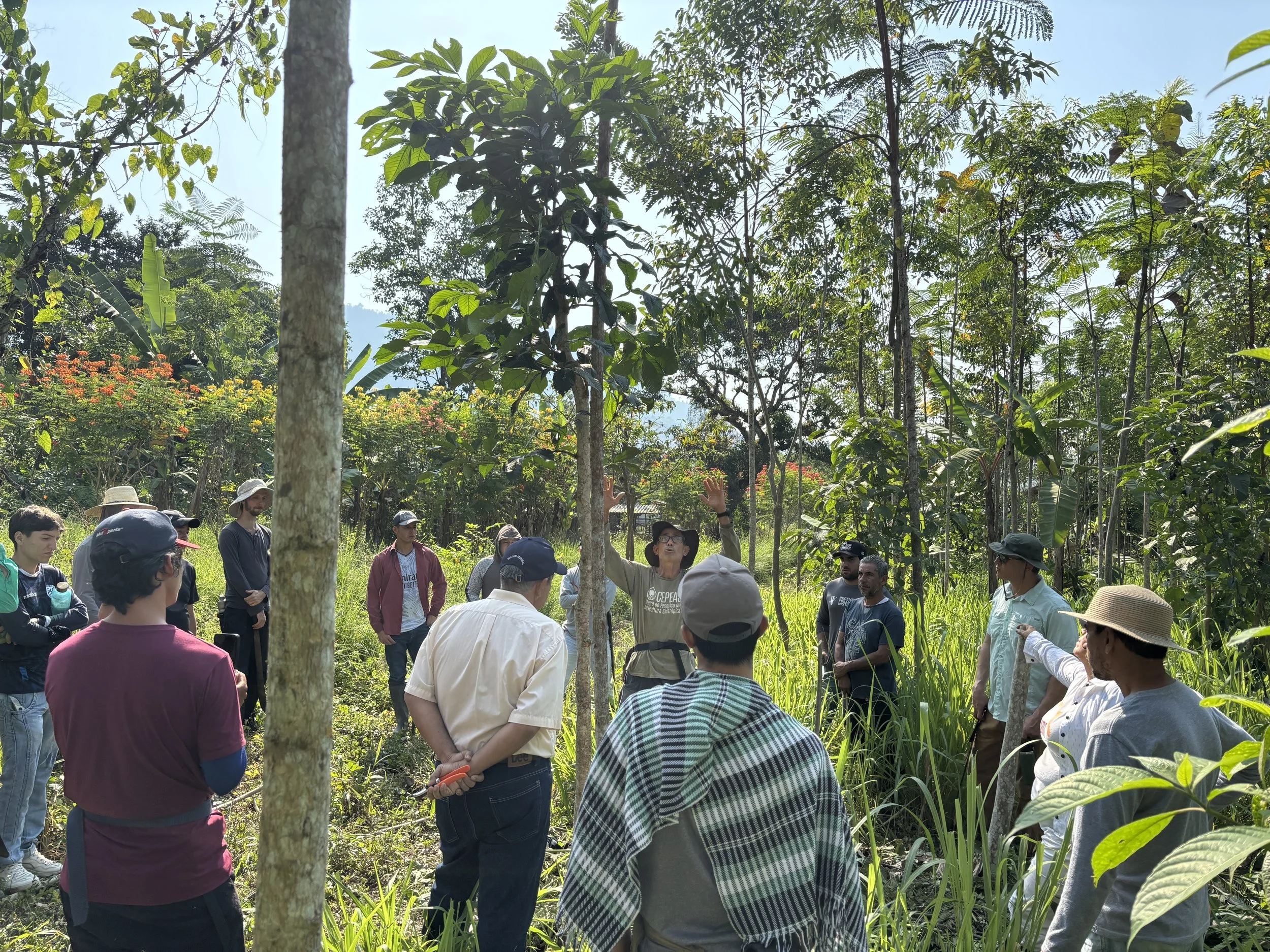
Observe working systems.
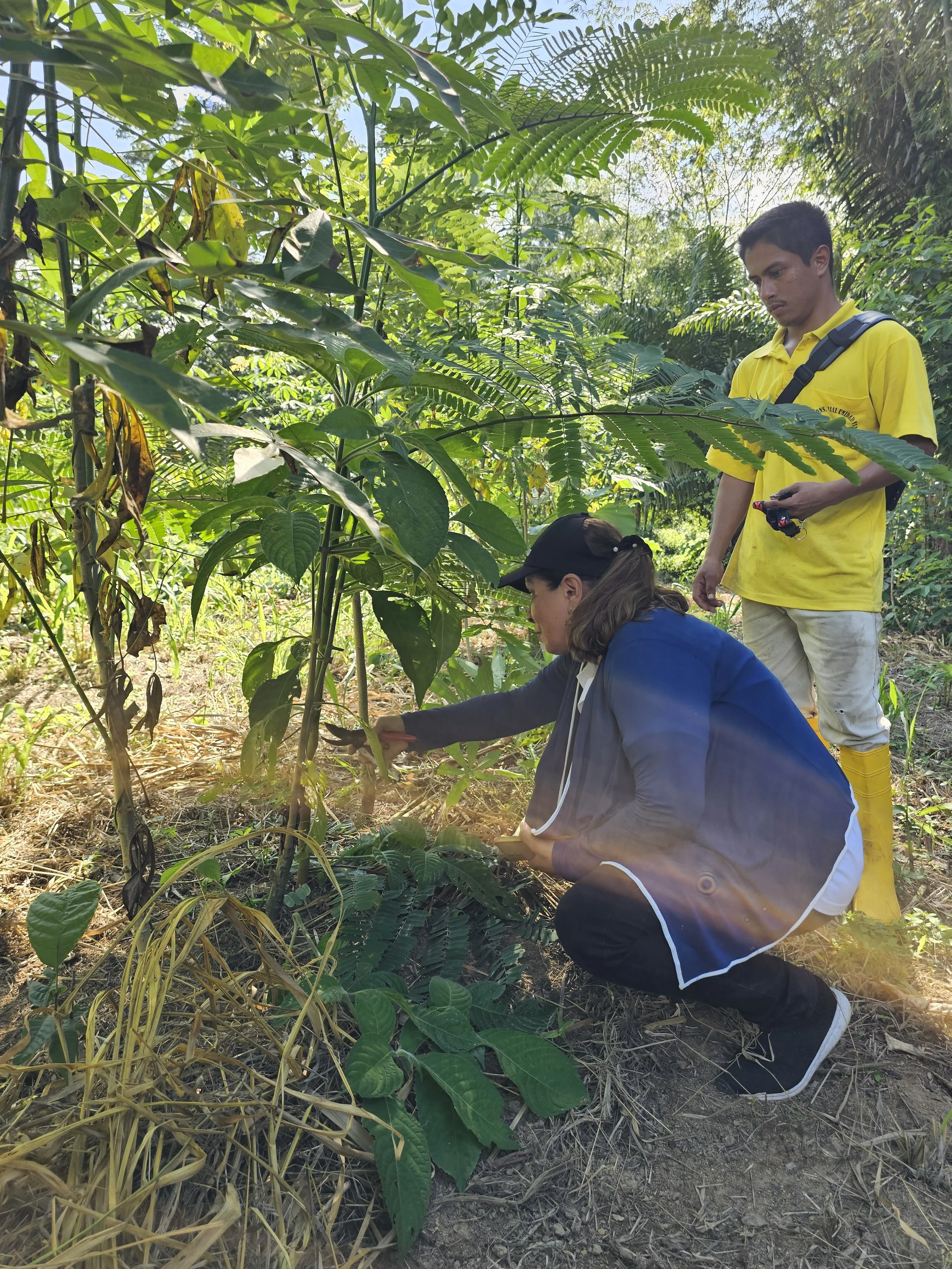
Farmers enter mature and developing agroforestry to examine succession, strata, pruning response, biomass production, soil cover, and crop interactions directly.
Build the technical model.
Field seminars cover planting design, species functions, fine-flavor cacao integration, soil processes, water, propagation, management intervals, and economic roles.
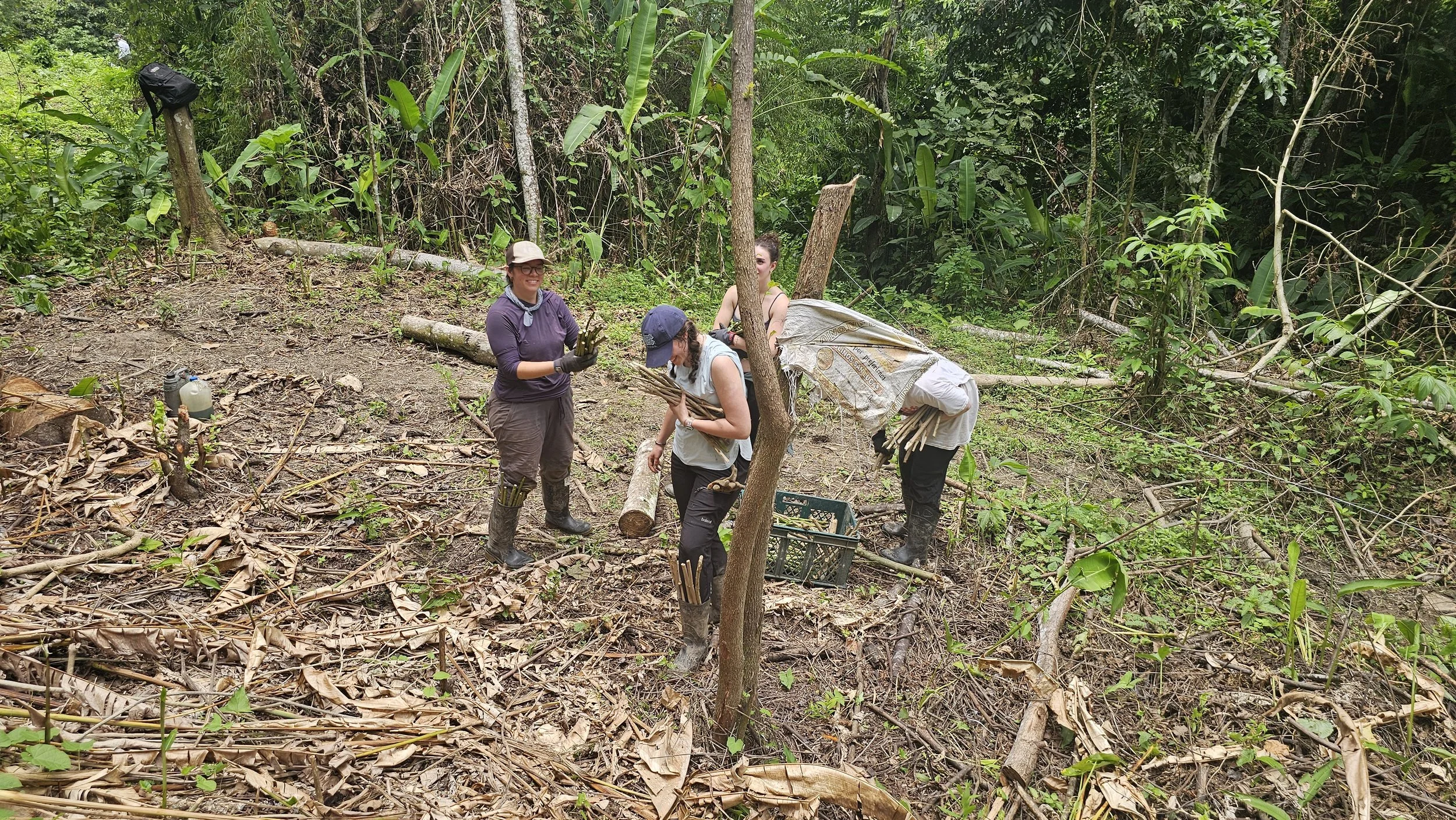
Establish collaboratively.
Participants develop practical competence through layout, planting, pruning, grafting, and mingas conducted with technicians, promoters, and neighboring farmers.
Operate a farmer-owned plot.
Each participant establishes a 30 × 30 meter practice system supported by planting materials, tools, water infrastructure, technical design, and continued accompaniment.
Return, monitor, and adapt.
Farm visits, workshops, mingas, and monitoring continue after installation so early management problems can be diagnosed under real operating conditions.
Transfer leadership.
Farmer-promoters convene regional groups, coordinate workdays, mentor neighboring farms, support monitoring, and progressively reduce dependence on external instruction.
05 · Research agenda
Technical capability and rural agency.
Regeneration is treated as a human process expressed through land. The program examines whether participants can manage succession, coordinate labor, diagnose problems, mobilize peers, and connect diversified production to viable livelihoods.
- Can farmer-promoters maintain technical quality as the network expands?
- Which species combinations and management intervals perform across distinct farm conditions?
- Which water, nursery, labor, and transport constraints most strongly affect survival and early development?
- How can cacao quality, traceability, and local processing improve returns without narrowing the landscape to cacao alone?
06 · Evidence to date
Evidence at the current stage.
Across its first two years, the Farmer Field School connected more than 125 farmers from over 40 rural communities through training, regional learning, plot establishment, and continued support. During 2026, 95 practice plots covering 12.15 hectares moved from installation into active management.
These young systems have not reached productive maturity. Current evidence is strongest on establishment, survival, participation, early management, and promoter capacity. Long-term ecological, production, and livelihood outcomes require continued measurement.
Network participation
125+
farmers connected through the first two program years
Geographic reach
40+
rural communities represented across the learning network
2026 establishment
95
plots comprising 85 new farmer systems and 10 farmer-promoter systems
Area established
12.15 ha
reported under practice agroforestry during the 2026 phase
Planting materials
25,000+
cacao, fruit, timber, and support trees planted across participant systems
Early monitoring
93%
cacao-tree survival recorded within the current monitoring sample
Local leadership
10
farmer-promoters coordinating groups, workdays, mentoring, and monitoring
Pilot structure
5 hubs
regional learning groups established during the first program year
07 · Agroforestry partners
Distinct institutional roles behind implementation.
The Farmer Field School combines a permanent land base, applied research and education, farmer-learning expertise, local project governance, and international grant participation. Each partner contributes a defined function within the wider delivery structure.
Applied research and education
Regeneration Field Institute
Develops the learning model, technical curriculum, research agenda, practitioner education, and institutional collaborations that inform implementation.
Partner profilePermanent field base
Los Arboleros Farm
Provides the approximately 70-acre working landscape, infrastructure, established systems, trial areas, and continuity required for long-term agroforestry development in Manabí.
Partner profileGrant structure and governance
Rotary International and Guayaquil Astillero
Rotary Global Grants and club partnerships financed the 2025 pilot and 2026 expansion. The Rotary Club of Guayaquil Astillero provides local grant leadership and oversight.
Partner profileFarmer-learning collaboration
EkoRural
Contributes experience in farmer-to-farmer learning, endogenous development, and participatory agricultural work with rural communities across Ecuador.
Partner profile08 · Farmer Field School film
The program, in the voices of the people operating it.
Hear participating farmers, farmer-promoters, and technical staff describe how the Farmer Field School is establishing participant-owned agroforestry and strengthening a regional learning network across coastal Ecuador.