Rotary Partnership · Farmer Field School
Grant architecture behind measurable field implementation.
Rotary clubs, districts, and The Rotary Foundation connect local project governance with international resource mobilization, measurable objectives, financial controls, and continued reporting for the Farmer Field School in coastal Ecuador.
01 · Partnership role
Capital, governance, and accountability move together.
The grant is part of the operating system.
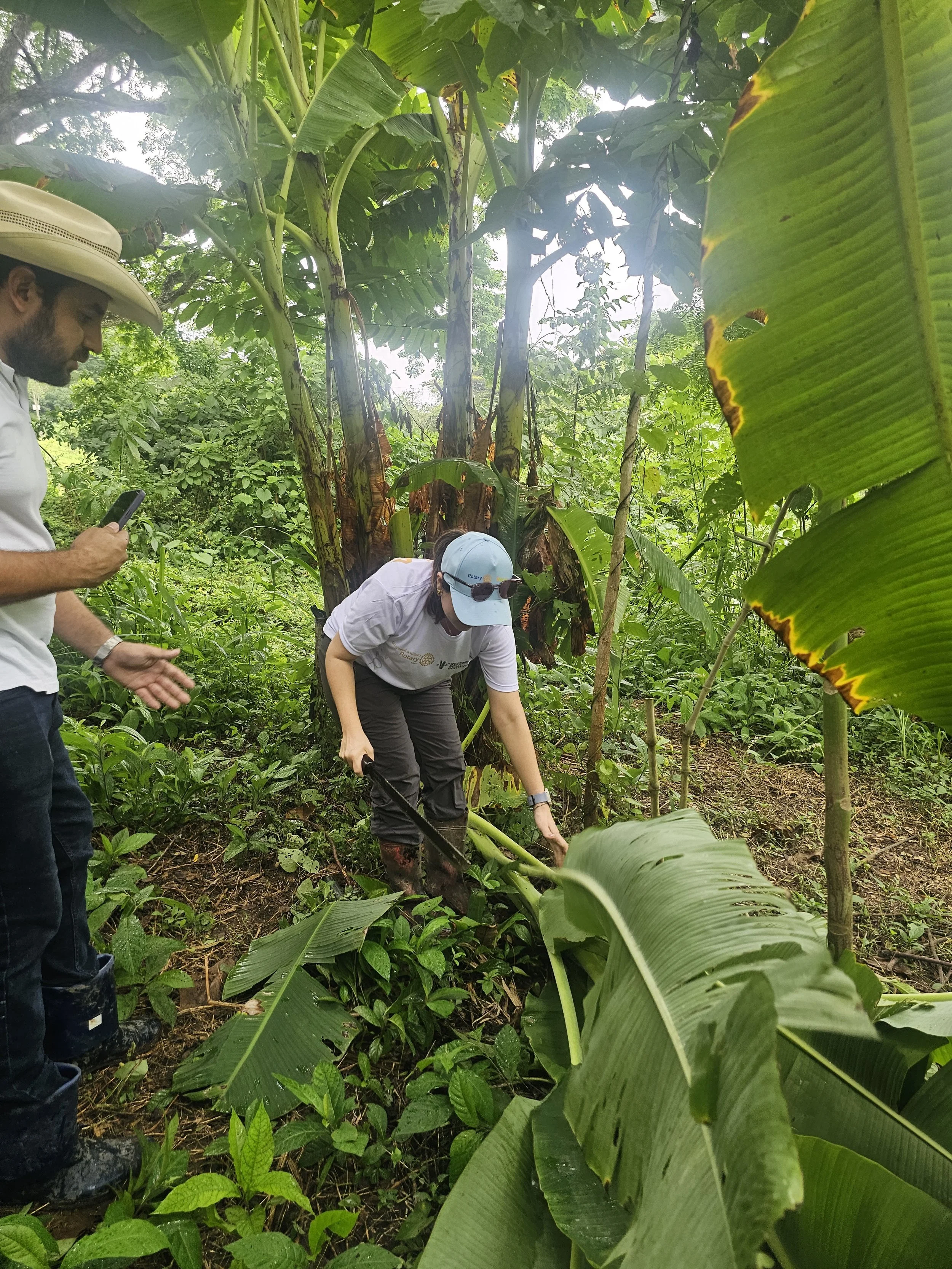
Farmer training at this scale requires more than a transfer of funds. Rotary’s Global Grant structure connects local and international club sponsorship, District Designated Funds, Foundation participation, community assessment, measurable objectives, financial controls, and formal reporting.
For the Farmer Field School, that architecture supports a multi-year program rather than a one-time distribution. Building Carbon coordinates financing and implementation resources; RFI and the technical team lead education and monitoring; farmer-promoters organize regional learning; and Rotary partners provide grant leadership, oversight, and international resource mobilization.
Community assessment and host leadership.
Local relationships, implementation realities, and project governance anchor the work in Ecuador.
Club and district resource assembly.
Partner clubs mobilize cash, DDF, technical review, communication, and sustained project relationships.
Measurable objectives and formal reporting.
Global Grant participation requires defined goals, qualified sponsors, financial controls, sustainability planning, and documented results.
02 · Program record
Two phases built the operating model.
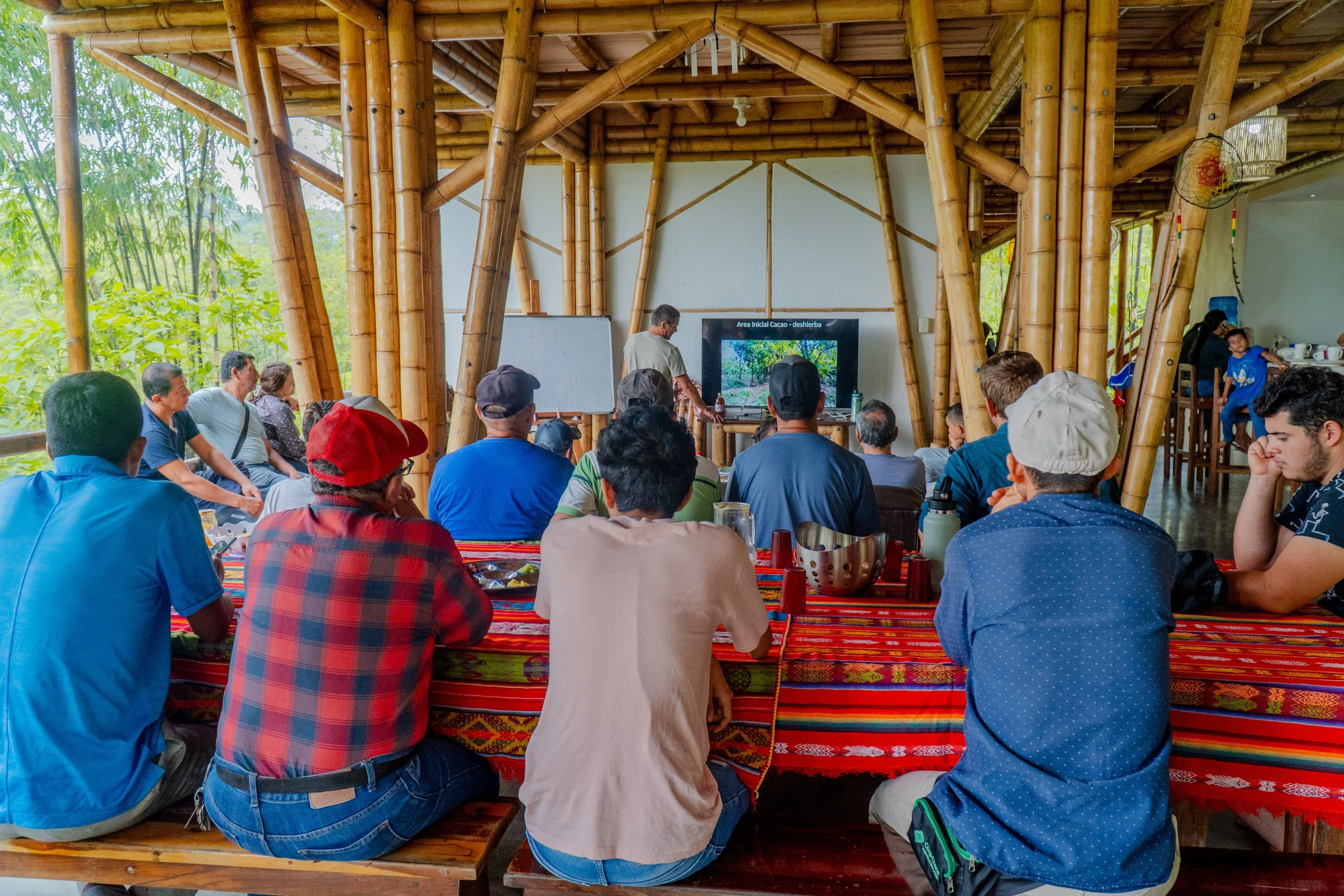
The 2025 pilot established the Farmer Field School’s regional learning structure. The 2026 expansion tested whether farmer-promoter leadership, technical accompaniment, installation logistics, and monitoring could function across a substantially larger network.
2025 · GG2570132
The pilot establishes the learning structure.
Twenty-five farmers across five regional hubs complete technical training and establish 30 × 30 meter practice plots on their own farms.
- 25
- participating farmers
- 5
- regional learning hubs
- 25
- farmer-owned practice plots
2026 · GG2683091
The network expands through farmer-promoters.
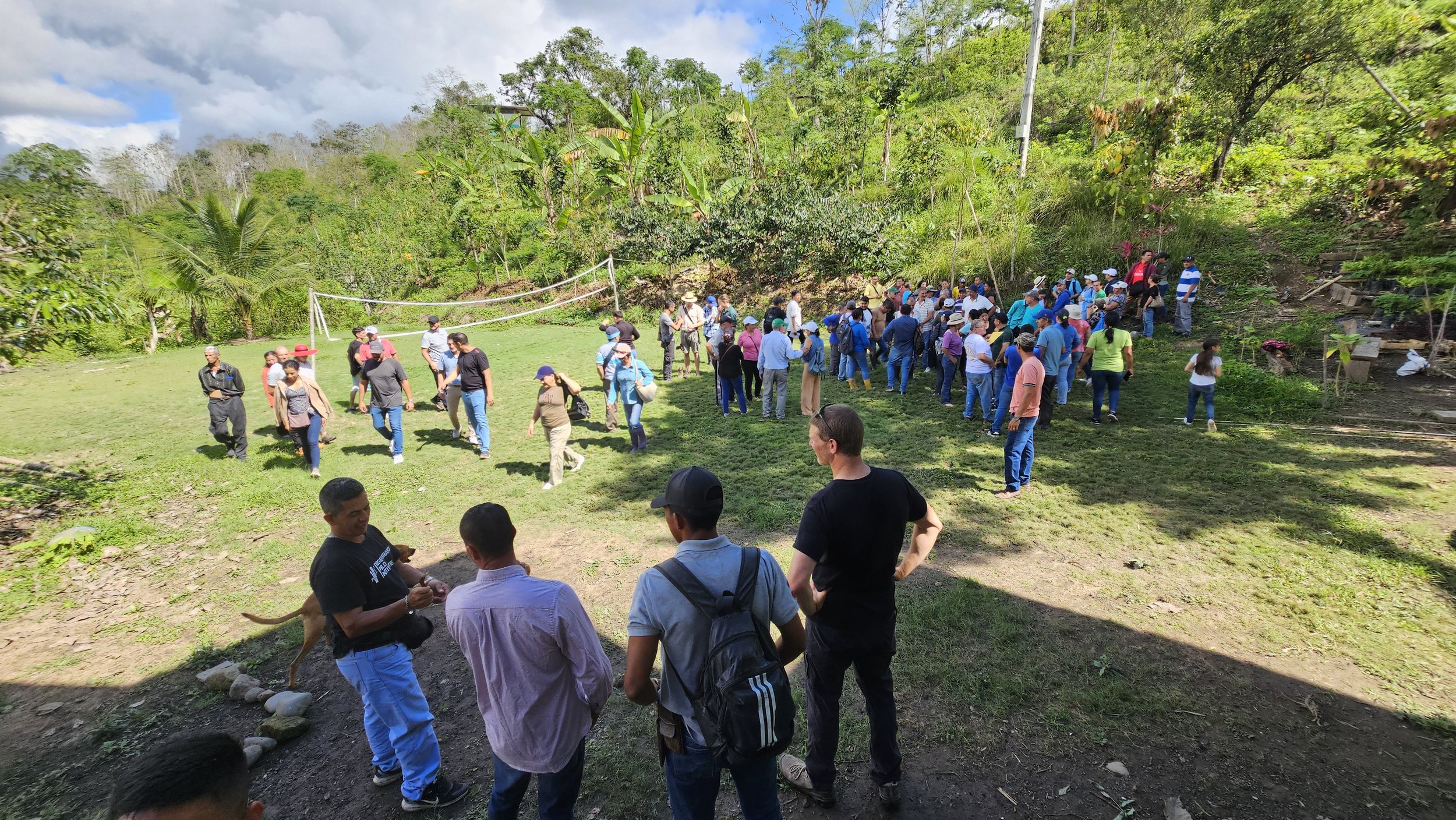
Eighty-five new farmers enter the program, while ten pilot participants assume promoter roles supporting workdays, mentoring, regional coordination, and monitoring.
- 85
- new participating farmers
- 10
- farmer-promoters
- 95
- plots established or expanded and monitored
farmers connected across the first two program years
rural communities represented across the learning network
plots comprising 85 new farmer systems and 10 farmer-promoter systems
cacao, fruit, timber, and support trees planted across participant systems
Current evidence is strongest on participation, establishment, survival, early management, and promoter capacity. The agroforestry is not yet commercially mature; long-term ecological, production, and livelihood outcomes require continued measurement.
03 · Proposed 2027 phase
Deepen capability while the network grows.
The proposed third phase concentrates resources on new farmer entry, expansion of successful plots, stronger promoter coverage, rural youth skills, seed and propagation capacity, and continued monitoring.
Targets describe the program at full funding and remain subject to final grant approval and confirmed partner commitments.
04 · Funding pathway
Approximately three times the direct campaign.
The public campaign seeks approximately $65,000 in direct and club commitments. The proposed grant structure combines those resources with approximately $130,000 in partnering-district DDF and conditional World Fund participation to assemble approximately $195,000 in total project value.
The $195,000 figure is the rounded public funding goal. Final grant value depends on confirmed DDF commitments, Foundation eligibility and approval, exchange conditions, and the completed grant budget.
Layer 01 · Direct campaign
≈ $65,000Individual gifts, club cash, and aligned direct commitments.
Layer 02 · District resources
DDFEligible District Designated Funds committed through participating Rotary districts.
Layer 03 · Foundation
Conditional participationWorld Fund participation applied to eligible DDF under applicable Foundation rules.
Planned assembled value
≈ $195,000A project-specific funding structure—not an automatic or universal Rotary multiplication formula.
05 · Governance and reporting
Every role carries a control function.
Credibility depends on knowing who assesses, sponsors, administers, implements, monitors, and reports. The Rotary Club of Guayaquil Astillero provides local grant leadership and oversight; international sponsors and participating districts carry resource-mobilization and shared grant-accountability responsibilities.
Local grant sponsorship, Ecuadorian coordination, financial oversight, and Rotary reporting.
International club partnership, resource mobilization, technical review, and shared grant accountability.
Campaign development, partner coordination, financial administration, implementation management, documentation, and donor communication.
Curriculum, field instruction, applied research, technical accompaniment, and monitoring.
Regional coordination, peer mentoring, workdays, plot observation, and local feedback.
Grant qualification, approval, financial standards, sustainability requirements, and formal closeout.
06 · Rotary participation
Bring the 2027 project to your club or district.
Rotary partners can advance the project through club cash, DDF commitments, international sponsorship, technical review, and introductions to aligned clubs and districts.