Bamboo · Material, building, and regional capability
Build the system, not only the material.
Building Carbon coordinates the capabilities required to move bamboo from a renewable regional resource into dependable construction: managed supply, preservation, engineering, fabrication, skilled labor, project delivery, and continued technical evaluation.
Cultivation, selection, harvest, and regional supply.
Preservation, drying, grading, storage, and traceability.
Components, connections, assemblies, engineering, and evidence.
Fabricators, builders, project partners, inspection, and maintenance.
01 · Origin and development
Construction began as an immediate regional response.
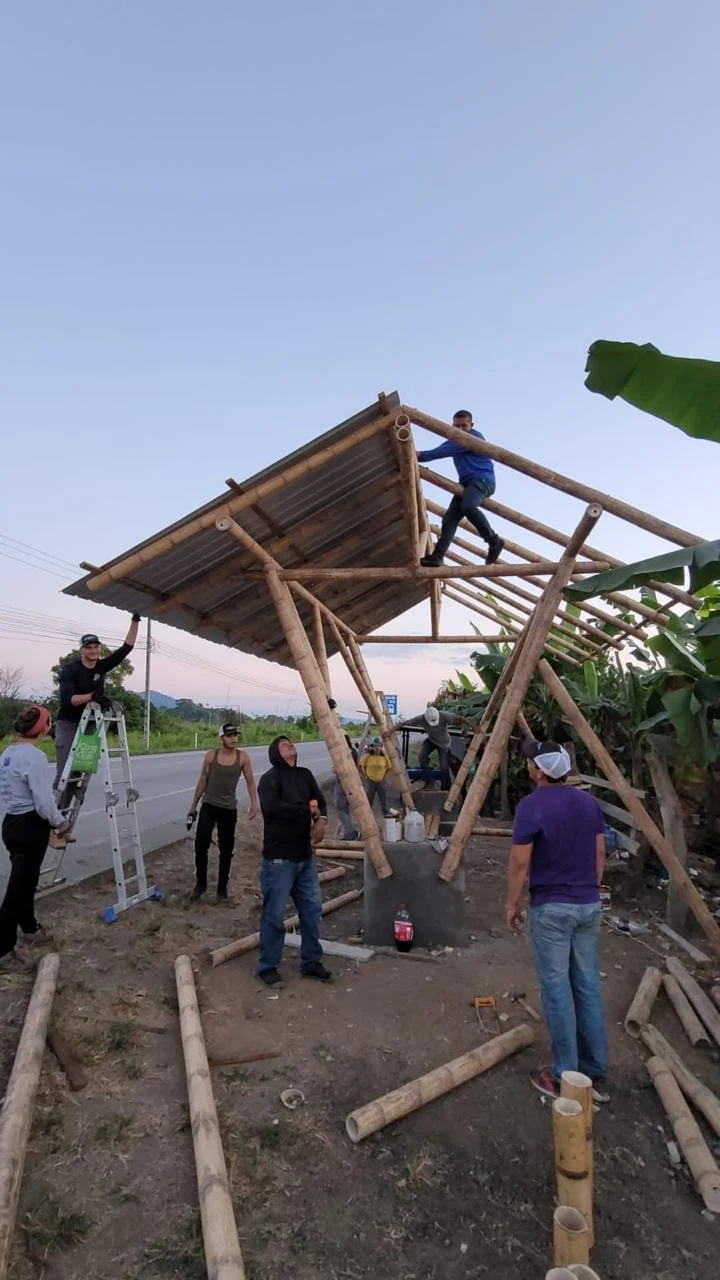
The work emerged after Ecuador’s 2016 earthquake, when emergency shelter and permanent housing demonstrated both the value of locally available bamboo and the operational gaps that prevent it from becoming a consistently delivered building system.
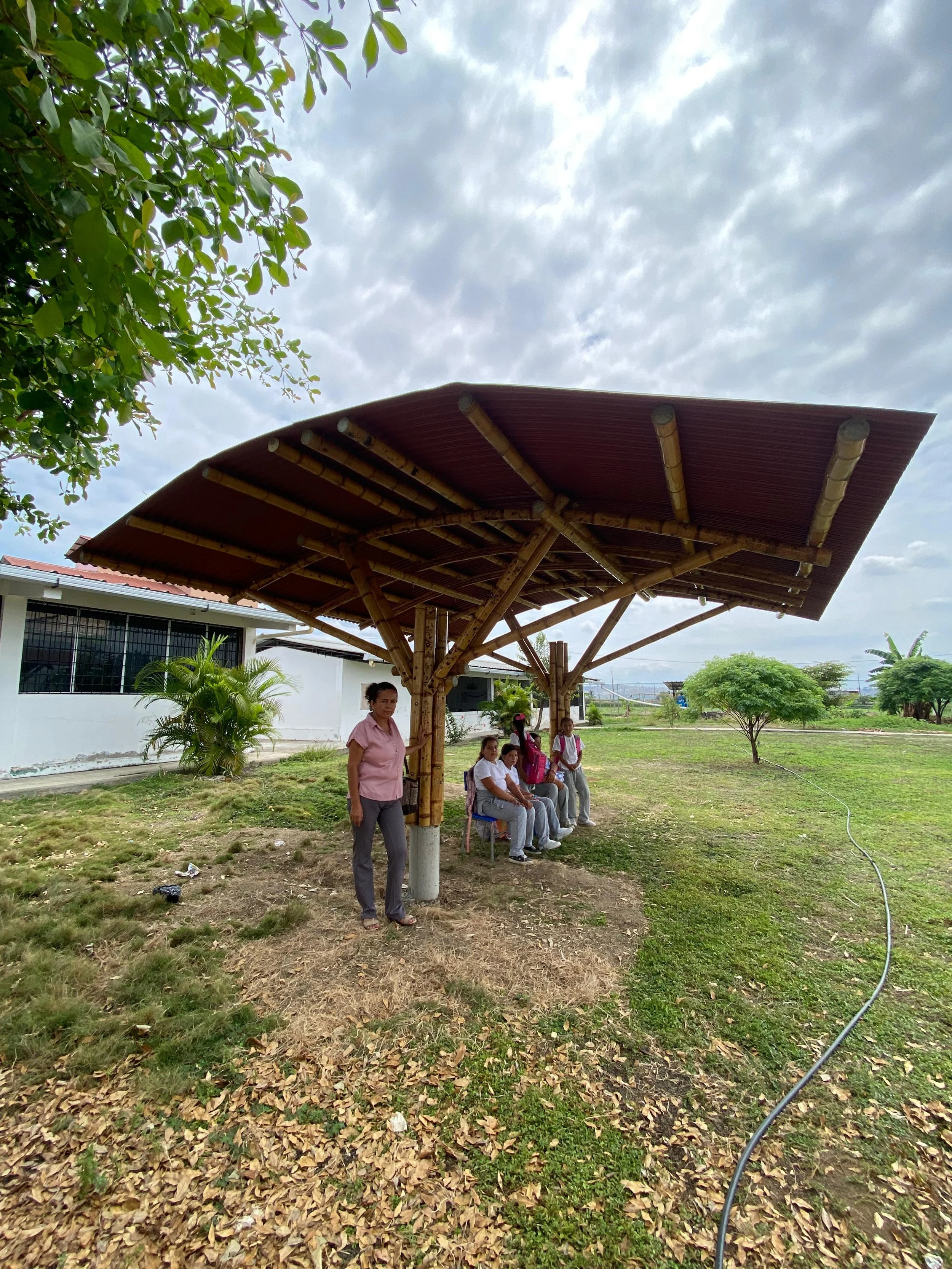
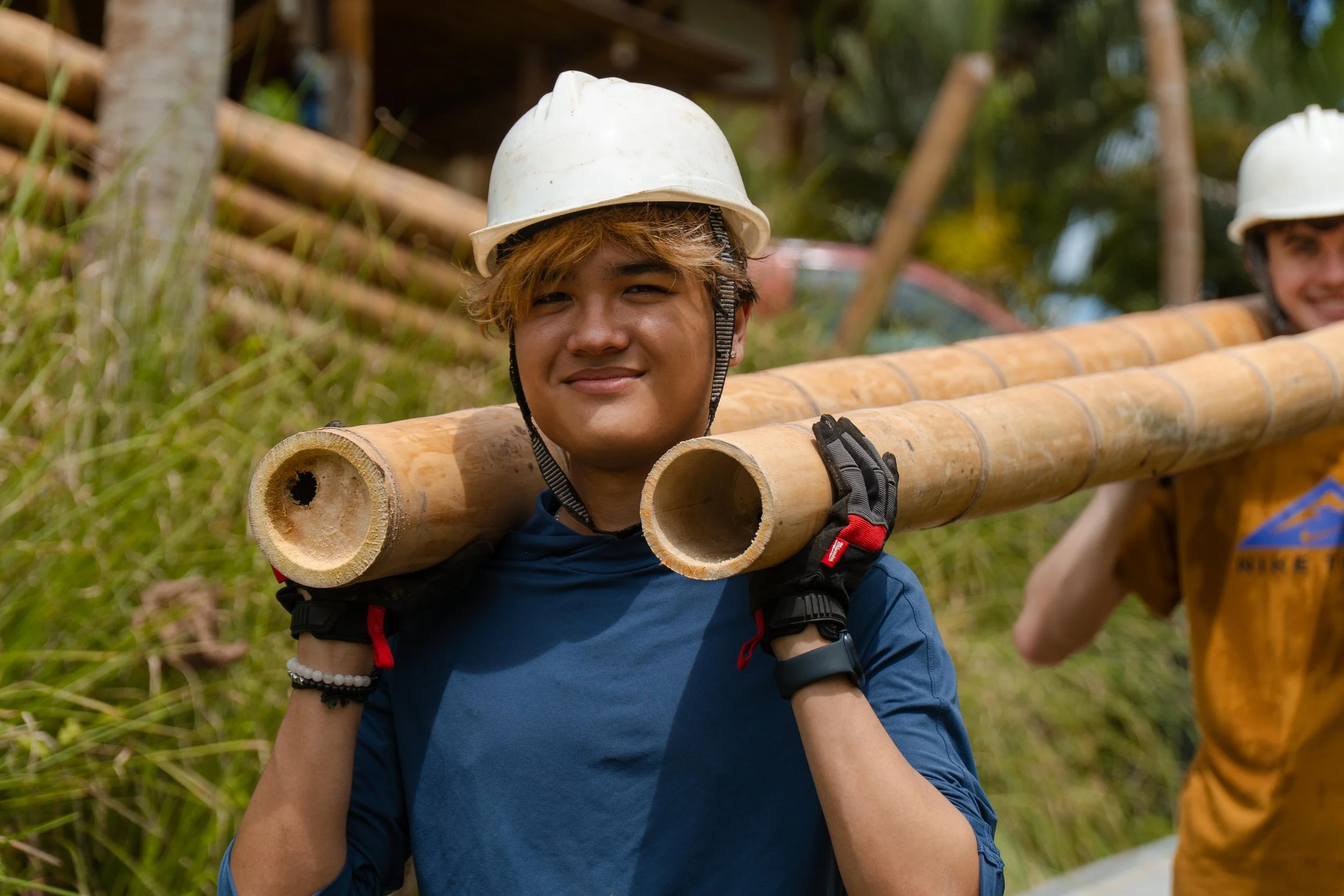
Post-earthquake construction made the larger constraint visible. A successful structure depends on more than access to culms or a compelling design. Material selection, preservation, detailing, trained labor, quality control, logistics, permitting, cost, and long-term maintenance must function together.
RFI extended this work through construction education and applied projects. Los Arboleros became the permanent base for bamboo cultivation, preservation, workshops, and prototyping. Building Carbon now connects that accumulated practice to research partnerships, financing, project development, and broader implementation pathways.
The objective is not to promote bamboo in the abstract. It is to make complete bamboo building systems more dependable in practice.
Emergency shelter and permanent housing work begins after the coastal Ecuador earthquake.
Los Arboleros supports cultivation, preservation, workshops, education, and continued material development.
Virginia Tech and RFI complete a full-scale experimental build at Los Arboleros.
Research, prototyping, workforce development, and implementation partnerships advance as one regional program.
02 · Complete value chain
Every stage affects building performance.
Bamboo construction cannot scale through isolated improvements. Each stage establishes the conditions for the next, and failures introduced early in the chain reappear later as variable components, difficult installation, premature deterioration, or unreliable cost.
The program therefore treats land management, material processing, technical design, production, construction, and maintenance as one connected delivery system.
- 01
Grow and manage.
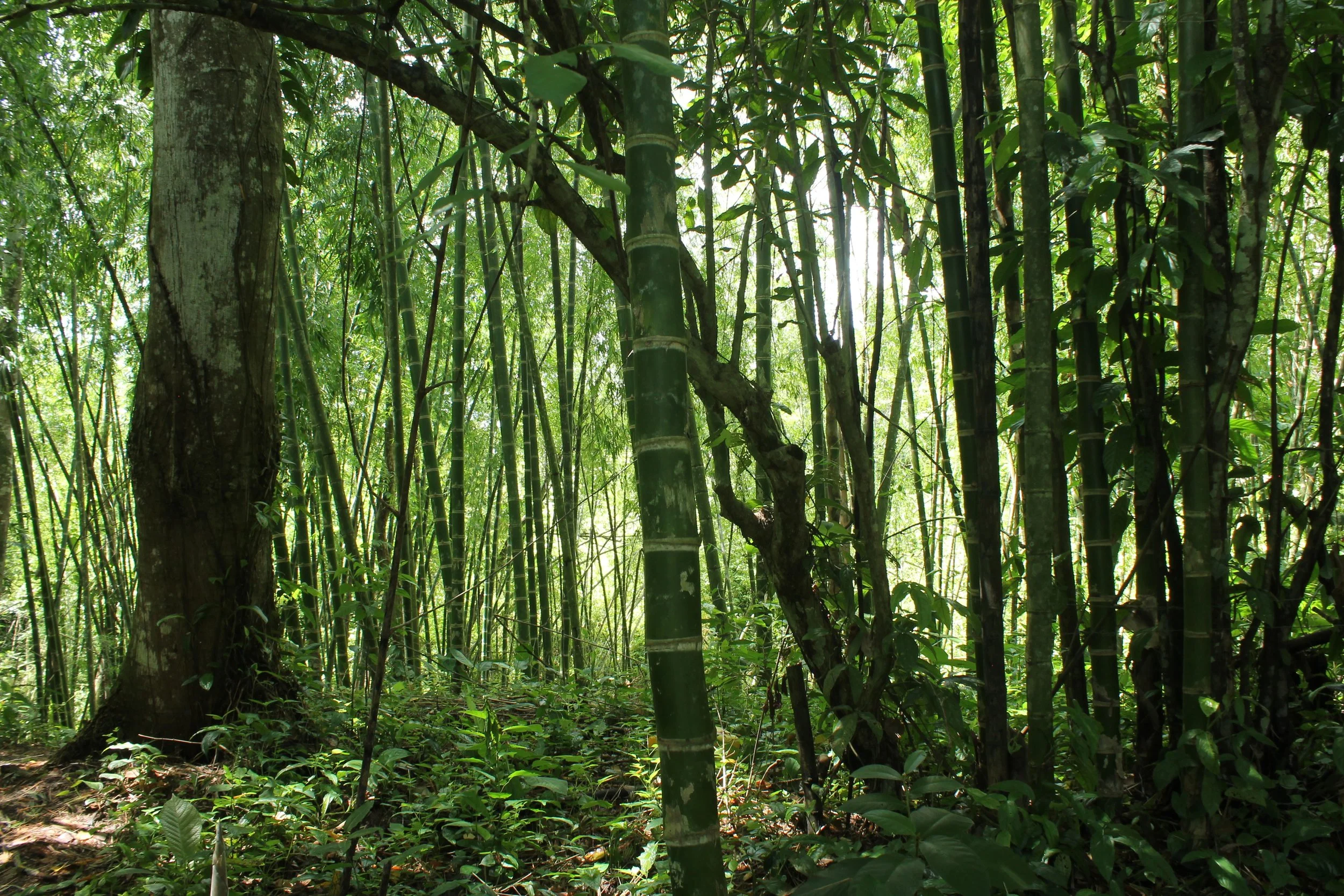
Map regional resources, maintain groves, establish harvest cycles, and strengthen long-term supply.
- 02
Select and harvest.
Match species, maturity, geometry, and harvest timing to the intended construction use.
- 03
Preserve and dry.
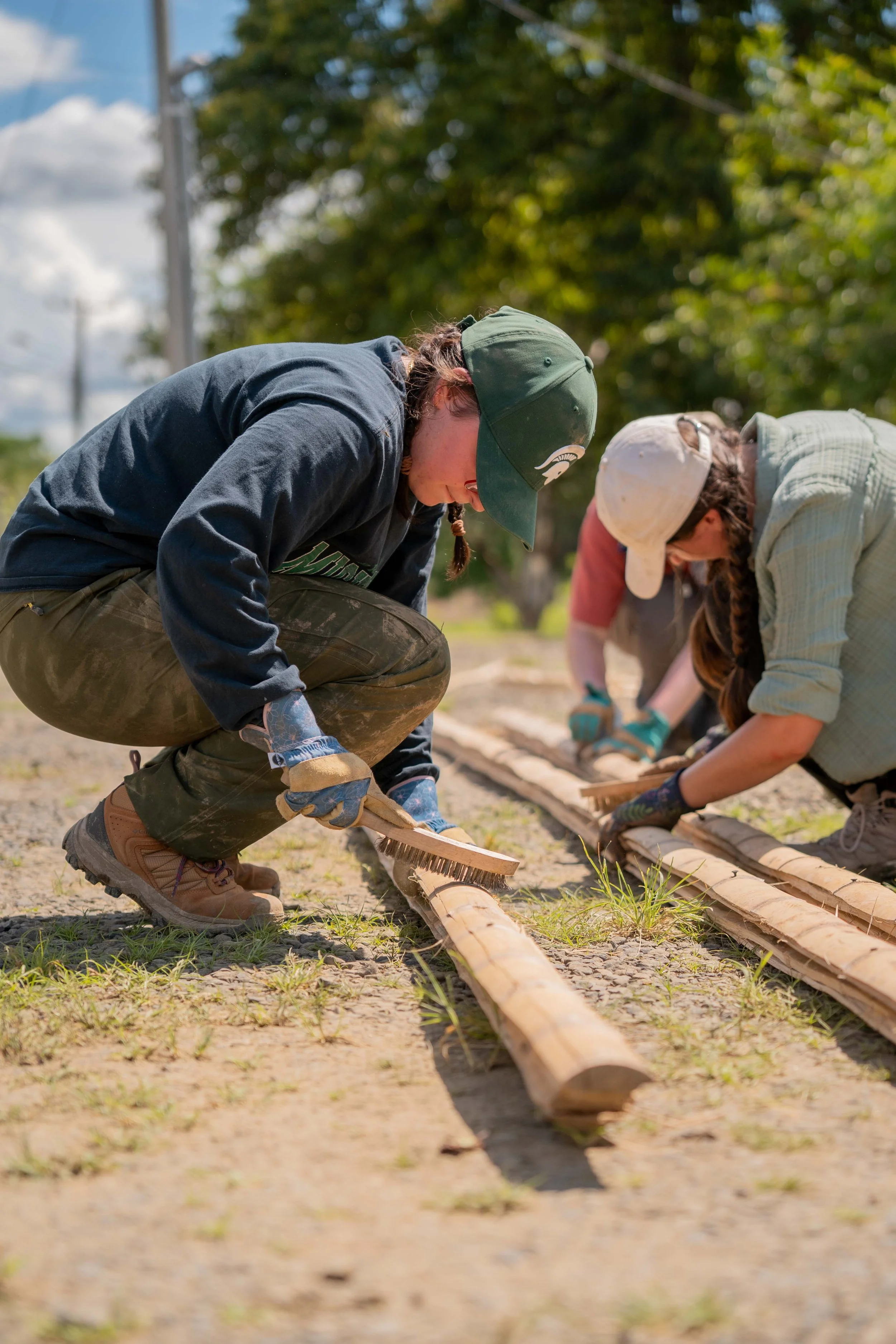
Control treatment, moisture, handling, storage, and documentation before fabrication.
- 04
Grade and assign.
Characterize usable material and direct variable culms toward appropriate components.
- 05
Design and test.
Develop connections, panels, beams, assemblies, and engineering evidence around actual material behavior.
- 06
Fabricate consistently.
Define tooling, tolerances, workflow, inspection, material recovery, and production records.
- 07
Build and inspect.
Coordinate transport, installation, site sequencing, weather protection, safety, and final quality.
- 08
Maintain and learn.
Observe completed work, document repair, evaluate performance, and return findings to the development process.
03 · Field base and applied R&D
Research is connected to a working material landscape.
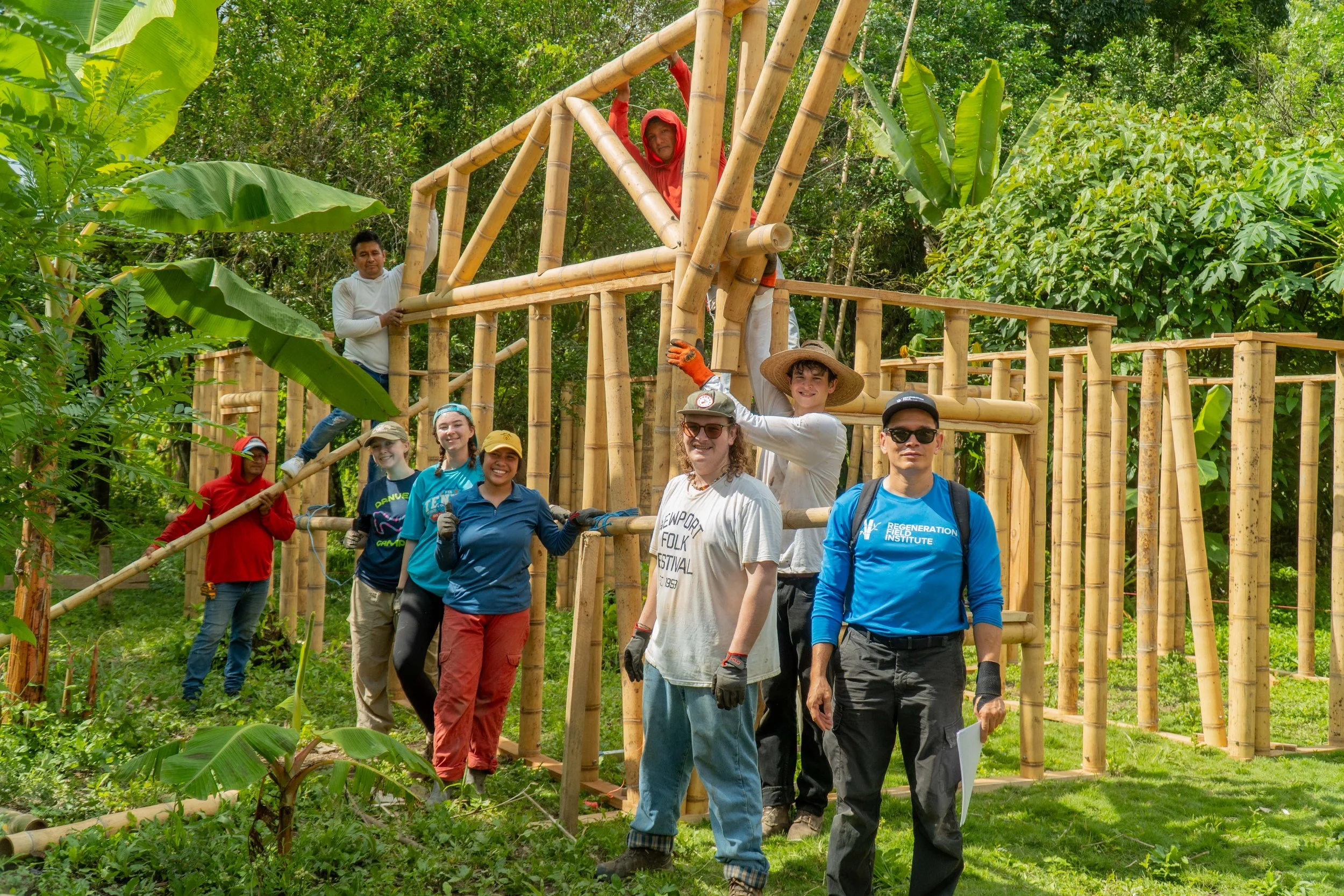
Los Arboleros provides land, bamboo resources, workshops, tools, climatic exposure, and operational continuity connecting cultivation with construction. RFI turns that setting into applied education, technical exchange, full-scale building, and collaborative research.
Observe resource management, harvest decisions, biological variability, and long-term supply.
Develop preservation, drying, storage, machining, and preparation workflows.
Move from specimens and drawings into components, connections, panels, and full-scale assemblies.
Build technical judgment through direct work with material, tools, builders, and completed structures.
04 · Applied initiative
MassBu retains the culm while changing the assembly.
MassBu is a research proposition for converting lightly modified bamboo culms into laminated panels, beams, and related building components. Selective facing creates more consistent contact surfaces while retaining more of the culm than conventional flattening or complete fiber reprocessing.
Development centers on the relationship among biological geometry, material recovery, bonding, connections, fabrication, structural behavior, and regional production conditions.
How much useful culm can remain within a dependable component?
How can variable pieces be characterized, sorted, and assigned?
Which configurations create consistent load paths and enclosure systems?
Which tools and controls can operate within a regional fabrication network?
Development status: MassBu remains under research, prototyping, and testing. It is not presented as code-approved, commercially validated, or ready for unrestricted structural use.
Examine the research partnership05 · Construction pathways
One material does not require one building system.
The regional program evaluates complementary methods according to project type, available skills, material quality, testing, climate, cost, maintenance, and delivery capacity. Approaches advance through demonstrated fitness for use—not novelty alone.
Whole-culm construction
Use the material directly where its geometry and craft logic are appropriate.
Selection, preservation, protected detailing, connection design, skilled fabrication, and maintenance remain central.
Lightly modified components
Create repeatable surfaces and larger assemblies while retaining the culm.
MassBu research examines panels, beams, fabrication, bonding, structural behavior, and production control.
Hybrid assemblies
Combine bamboo with enclosure and protection systems selected for place.
Mineral and bio-based layers, foundations, roofing, moisture control, and repair must be evaluated as a complete assembly.
06 · Workforce and regional production
The building system is also a human system.
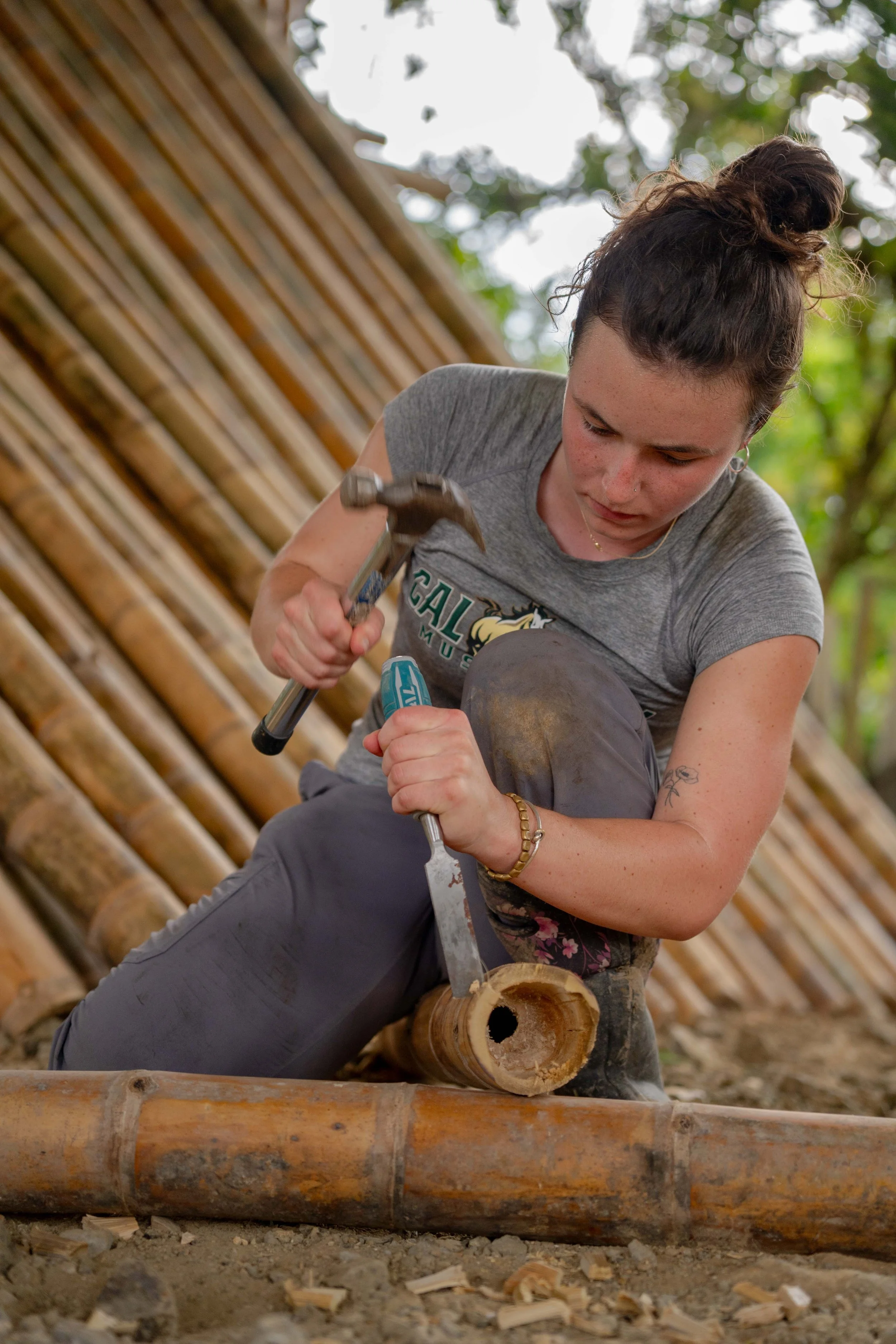
Dependable bamboo construction requires coordinated capability across land management, material processing, design, fabrication, site delivery, and maintenance. Its economic value depends on who develops those skills, controls production, and retains decision-making capacity within the region.
Growers and land managers
Managed groves, harvest planning, resource records, and long-term supply.
Treatment operators
Preservation, drying, storage, material handling, and process control.
Fabricators
Tooling, component production, tolerances, inspection, and material recovery.
Builders
Site sequencing, connections, enclosure, weather protection, and repair.
Designers and engineers
System selection, structural logic, documentation, testing, and compliance pathways.
Project partners
Finance, procurement, public coordination, client requirements, and long-term stewardship.

07 · Built work
Projects make the unresolved questions visible.
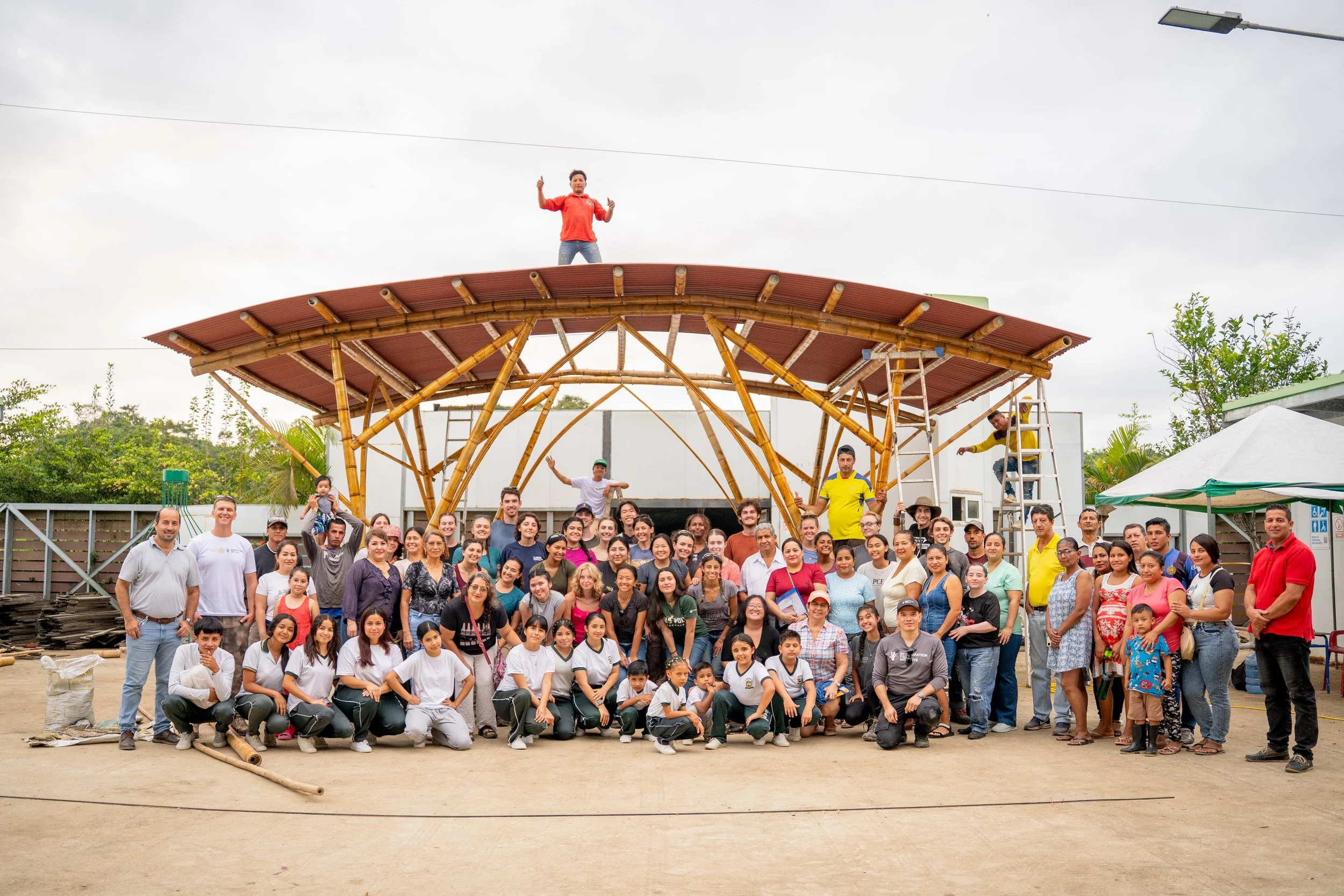
Completed and experimental structures form part of the development record. Each project tests a different combination of material supply, design, labor, fabrication, public coordination, installation, climate exposure, and maintenance.
2016 onward · Coastal Ecuador
Emergency response and permanent construction.
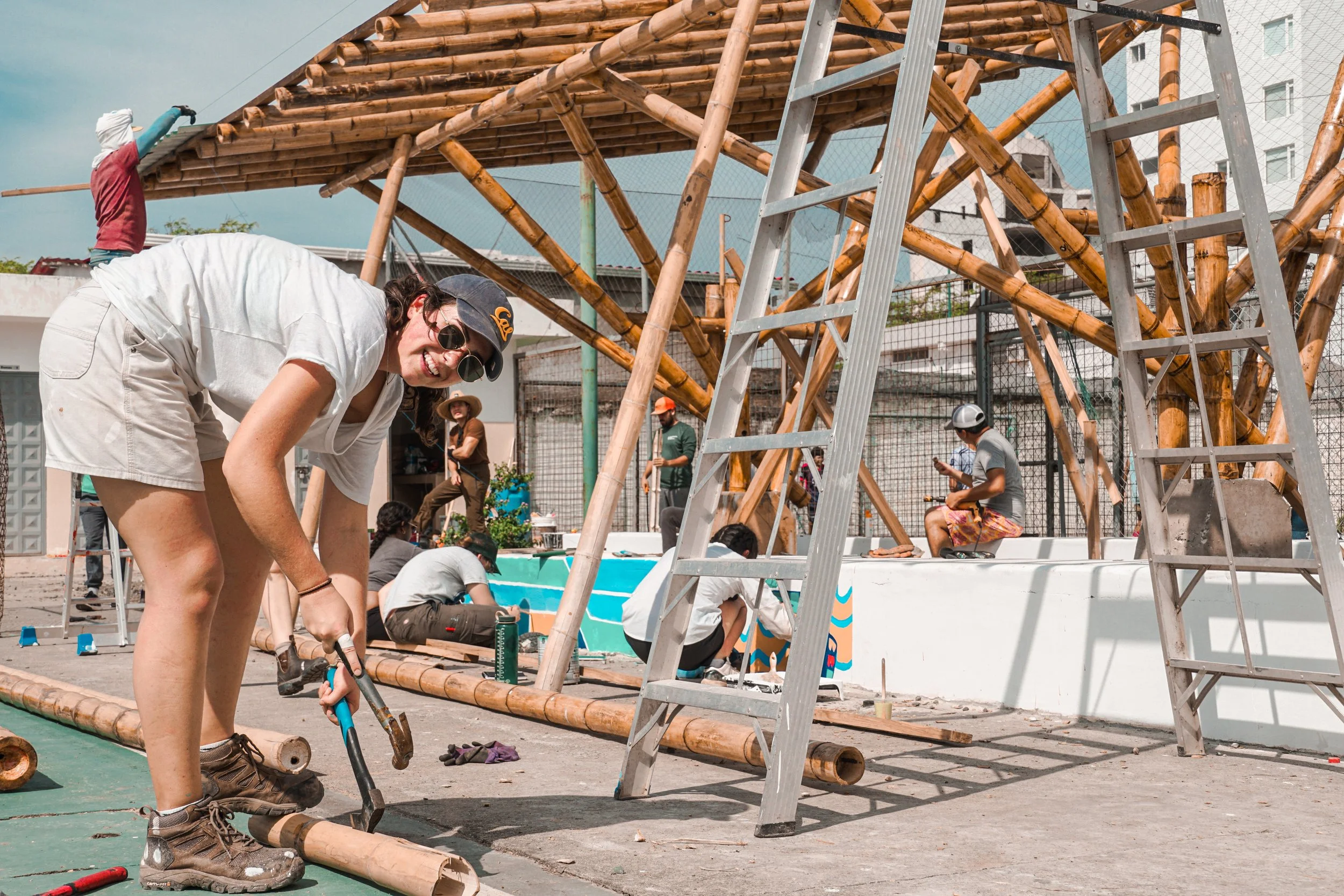
Early shelter, housing, and community projects establish the practical base and reveal the need for a complete delivery system.
2023 · Los Arboleros
Experimental field cabin.
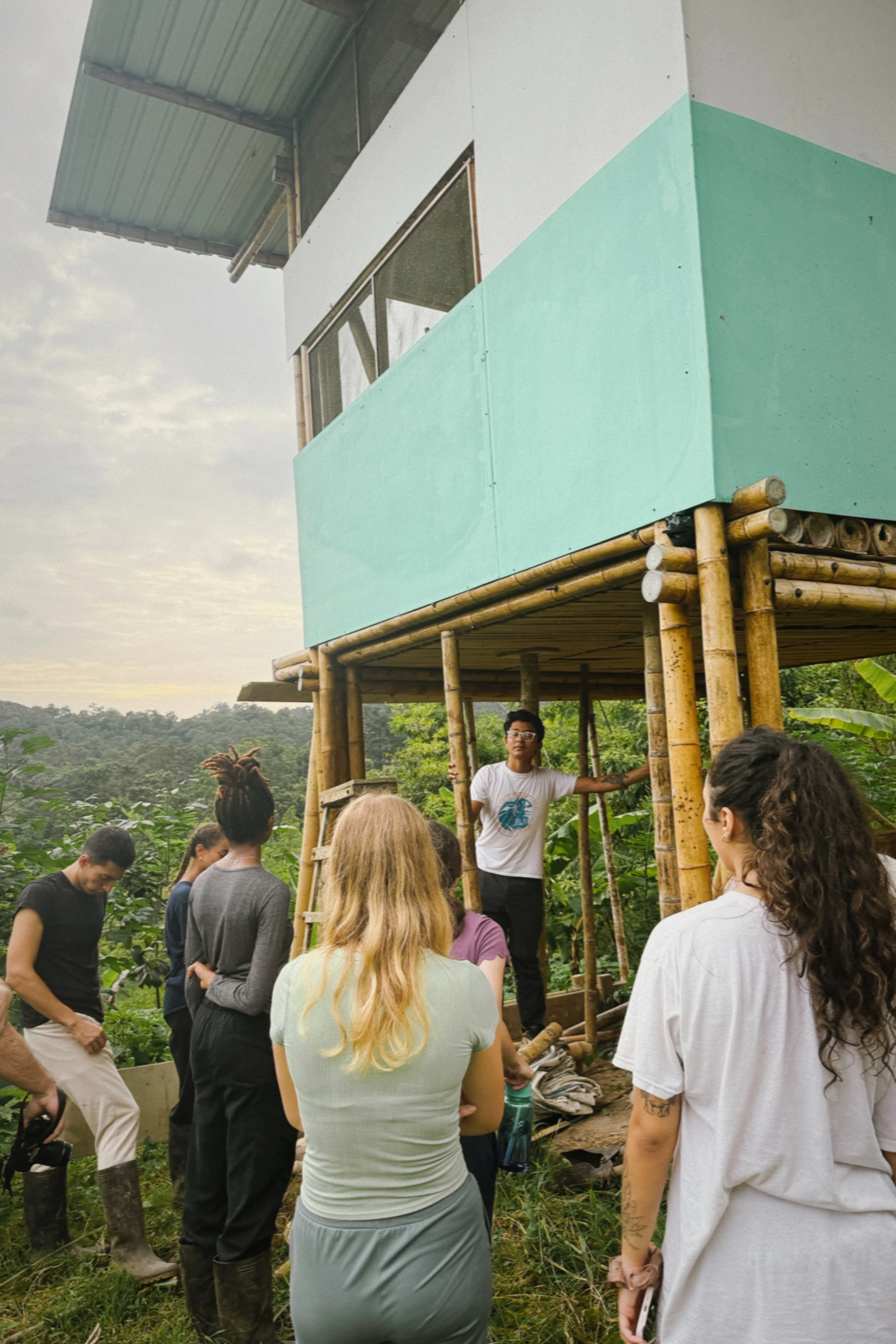
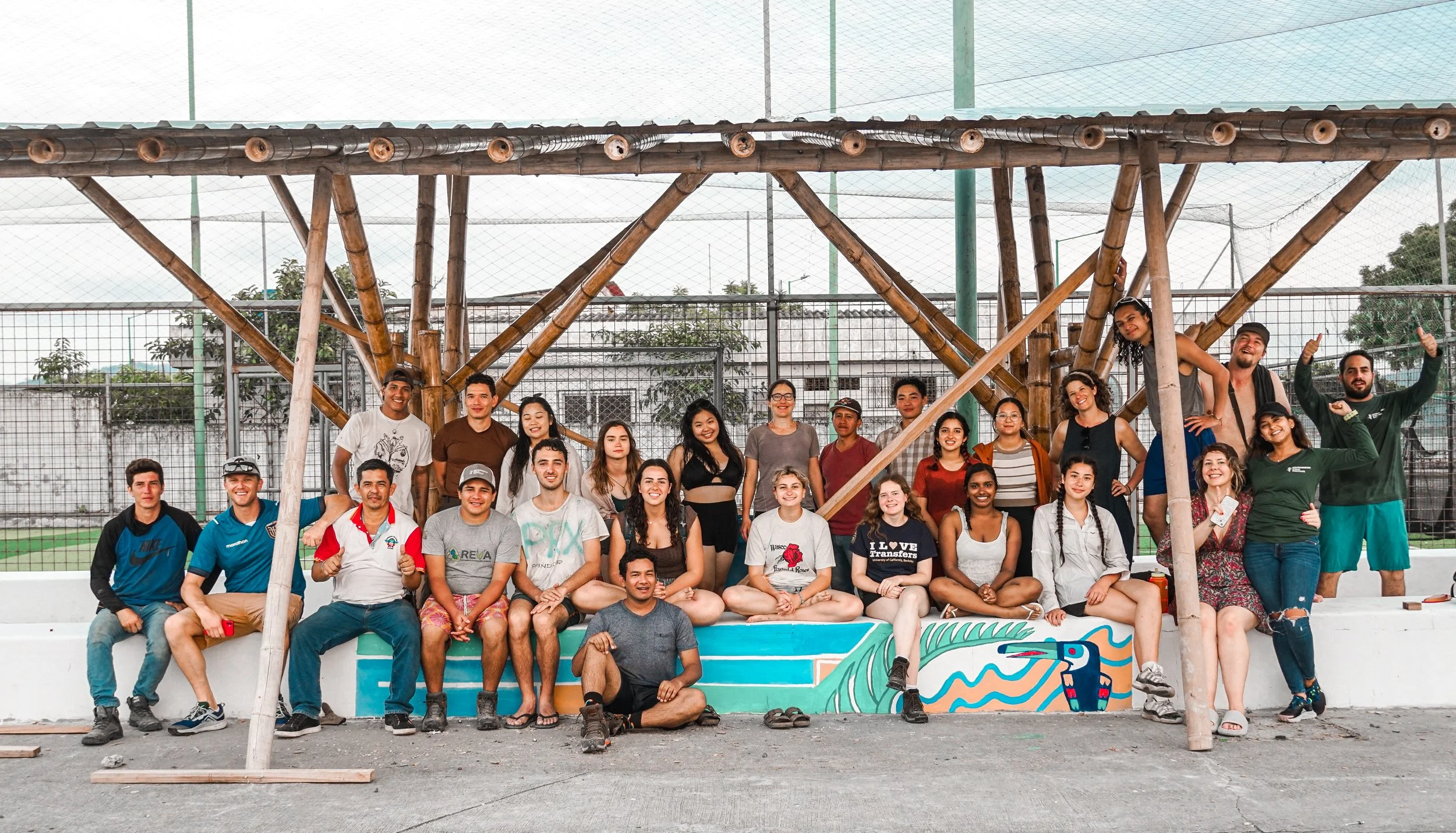
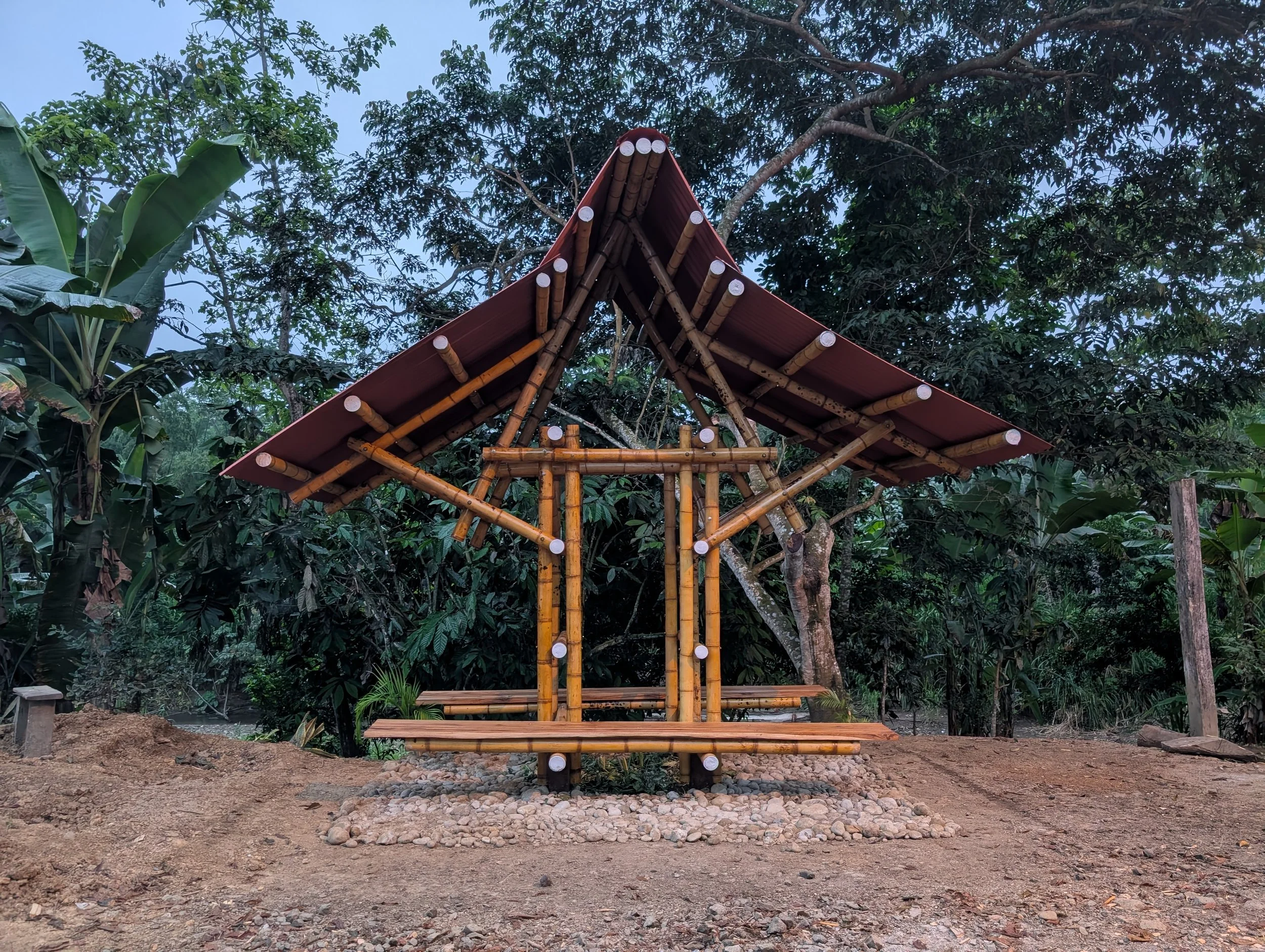
Virginia Tech, RFI, local practitioners, and students move research into a full-scale build under tropical field conditions.
2025 · Pastaza
Social-interest housing pilot.
A public-sector and institutional collaboration connects modular bamboo construction with Amazonian infrastructure and regional production questions.
08 · Testing and evidence
Claims advance only as the technical record advances.
Testing must connect material properties with component behavior, complete assemblies, production control, and performance after installation. Research partners maintain the primary technical record; Building Carbon connects that evidence to regional implementation decisions.
Carbon, cost, code, durability, and market-readiness claims require defined methods, transparent system boundaries, applicable standards, and documented results.
Material
Characterize variability.
Species, maturity, geometry, moisture, defects, preservation, and mechanical properties.
Component
Test the part.
Facing, bonding, connections, panels, beams, load paths, and failure behavior.
Assembly
Evaluate the whole.
Structure, enclosure, moisture, fire, durability, installation, and repair.
Production
Control repeatability.
Tooling, tolerances, inspection, throughput, waste, labor, and delivered cost.
Current public position
MassBu and related component research remain in development and testing. No claim of unrestricted structural use, commercial validation, or code approval should precede the supporting technical record.
Review the Virginia Tech research record09 · Collaboration architecture
Different institutions hold different responsibilities.
The bamboo program combines a permanent land base, applied education, material and design research, regional relationships, project development, public-sector coordination, and implementation capacity. Each partner carries a defined responsibility within that larger structure.
Implementation catalyst
Building Carbon
Project development, financing, partnership assembly, implementation pathways, and the connection between research and regional delivery.
Institutional roleEducation and field practice
Regeneration Field Institute
Applied education, construction practice, coordination, workshops, and translation between research and local building conditions.
Partner profilePermanent field base
Los Arboleros Farm
Bamboo resources, land, workshop infrastructure, full-scale building conditions, and continuity for cultivation-to-construction development.
Partner profileBiomaterials and fabrication
Virginia Tech BioDesign
Material research, computational design, fabrication development, full-scale prototyping, scholarship, and student collaboration.
Partner profileAmazonian project relationships
Fundación Pachamama
Territorial relationships and project context connecting infrastructure, conservation, rights, and forest-economy priorities in the Ecuadorian Amazon.
Building Carbon recordResearch and public implementation
Technical and public partners
Universities, research networks, engineers, local practitioners, prefectures, and project owners contribute testing, review, coordination, and delivery.
10 · Work with the program
Bring a defined problem, site, or research question.
Building Carbon works with research groups, architects, engineers, public agencies, project owners, funders, growers, and fabrication partners when collaboration can strengthen the regional cultivation-to-construction ecosystem.
Material characterization, components, assemblies, testing, fabrication, and full-scale validation.
Sites, housing, public infrastructure, project development, procurement, and delivery partnerships.
Managed supply, preservation, tooling, fabrication, workforce, quality control, and regional operations.
Applied research, equipment, training, prototypes, public-benefit construction, and value-chain development.