Regeneration Field Institute · Education and applied research
Learning built inside real projects.
Regeneration Field Institute develops immersive education and applied research through active work in regenerative agriculture, bamboo construction, ecology, restoration, and locally rooted enterprise across coastal Ecuador.
01 · Institutional role
Translate field knowledge into capability.
Education is the transfer infrastructure.
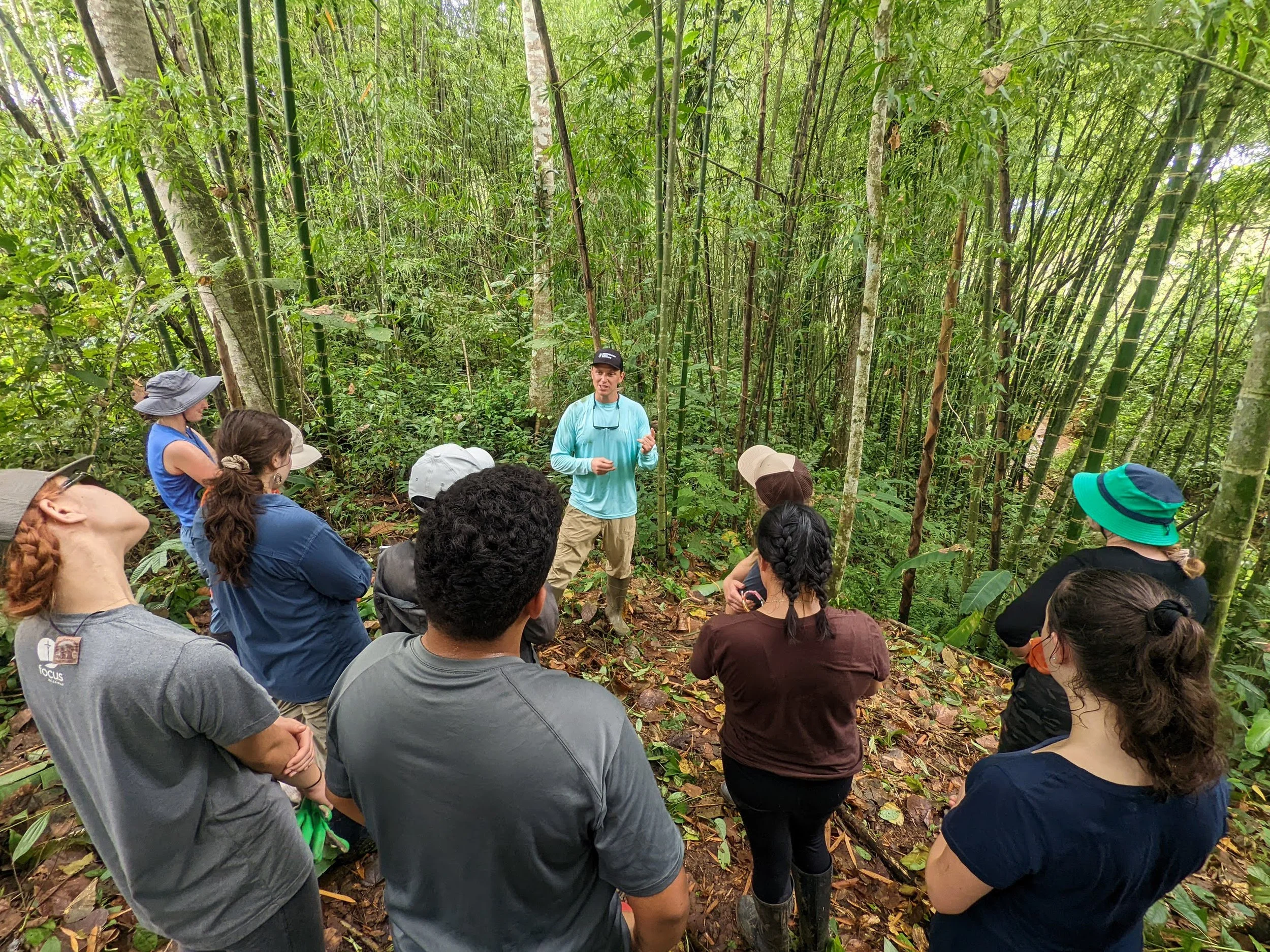
Los Arboleros supplies the permanent land base. RFI turns work conducted there and across Manabí into structured learning, applied inquiry, professional experience, and collaboration among farmers, builders, scientists, designers, educators, and students.
Its role extends beyond explaining completed methods. Participants enter active projects, work beside practitioners, examine tradeoffs, contribute labor and analysis, and learn how technical decisions are shaped by climate, materials, maintenance, budgets, institutions, and community priorities.
02 · Origin and development
From emergency response to long-term practice.
RFI’s work grew from the response to Ecuador’s 2016 coastal earthquake. Immediate construction and community projects revealed a larger need: durable local capability in natural building, landscape restoration, technical education, and rural livelihoods.
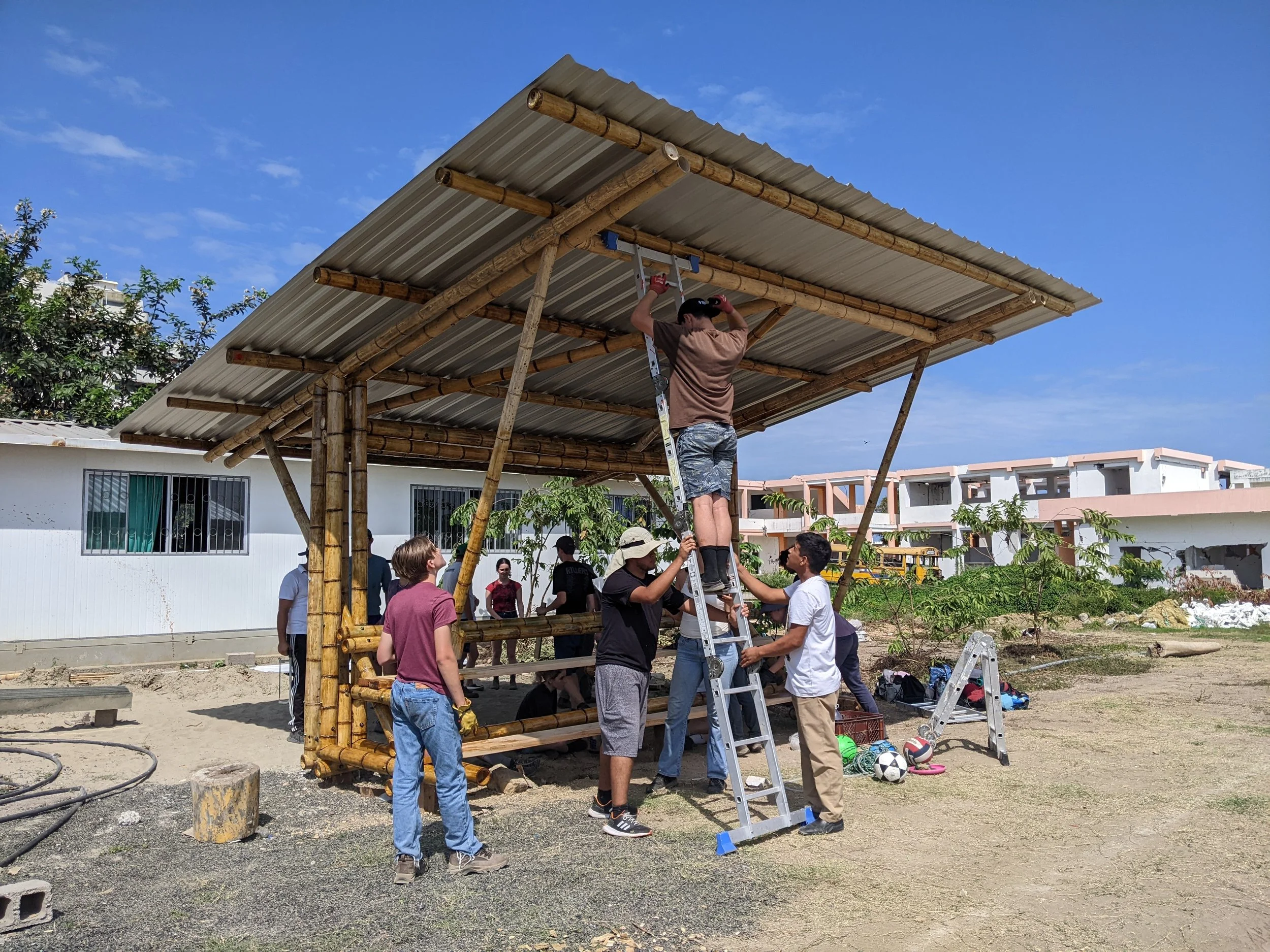
After the emergency construction period, RFI established its operating base at Los Arboleros Farm in Chone. A permanent site made it possible to connect bamboo cultivation and fabrication, diversified agriculture, ecological restoration, workshops, and multi-year observation.
That progression changed the institution’s central question. The objective could no longer be limited to delivering a structure or establishing a plot. It became necessary to understand how people develop the technical judgment, practical competence, and working relationships required to carry the work forward.
Earthquake response and bamboo construction begin.
Los Arboleros becomes the permanent field base.
Education and applied research connect local practitioners with national and international collaborators.
03 · Learning model
Observe, practice, contribute, and evaluate.
RFI uses project-based learning because regenerative work depends on judgment developed through practice. Instruction, hands-on application, technical discussion, and meaningful project contribution form one continuous sequence.
- 01
Read the context.
Participants examine the ecological, material, economic, and social conditions shaping the work.
- 02
Build the technical model.
Instructors establish the principles, methods, constraints, and evidence behind each approach.
- 03
Work inside the project.
Participants plant, prune, fabricate, build, monitor, document, or analyze alongside experienced practitioners.
- 04
Evaluate the result.
Performance, implementation quality, unresolved questions, and next actions return to the learning process.
04 · Applied research domains
Connected fields at different stages of development.
RFI works across disciplines that converge on the same landscape. Each has distinct methods, partners, evidence requirements, and levels of technical maturity.
Agroforestry and soil
Management across succession.
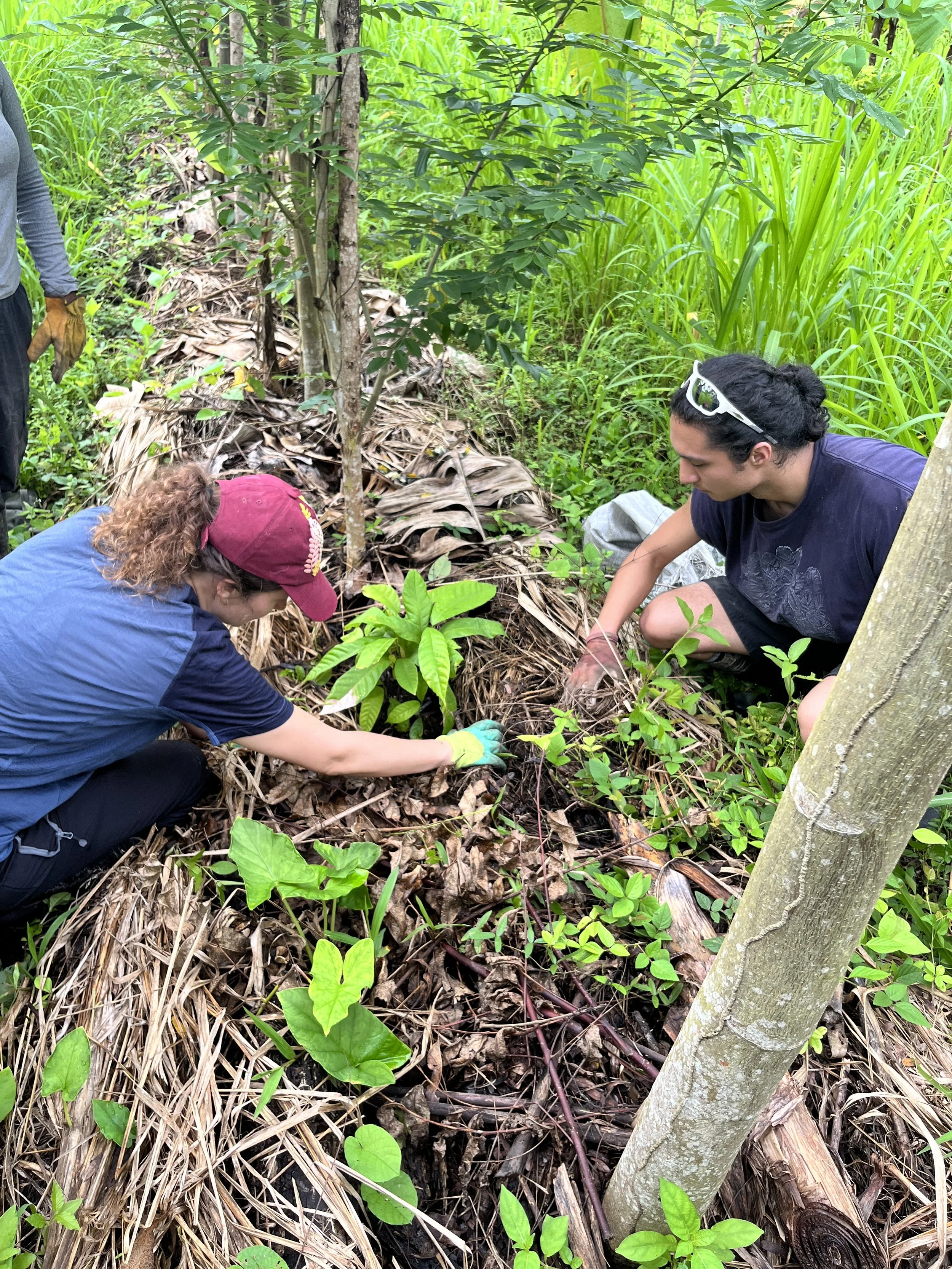
Planting design, pruning, biomass cycling, soil function, water constraints, establishment, and long-term management.
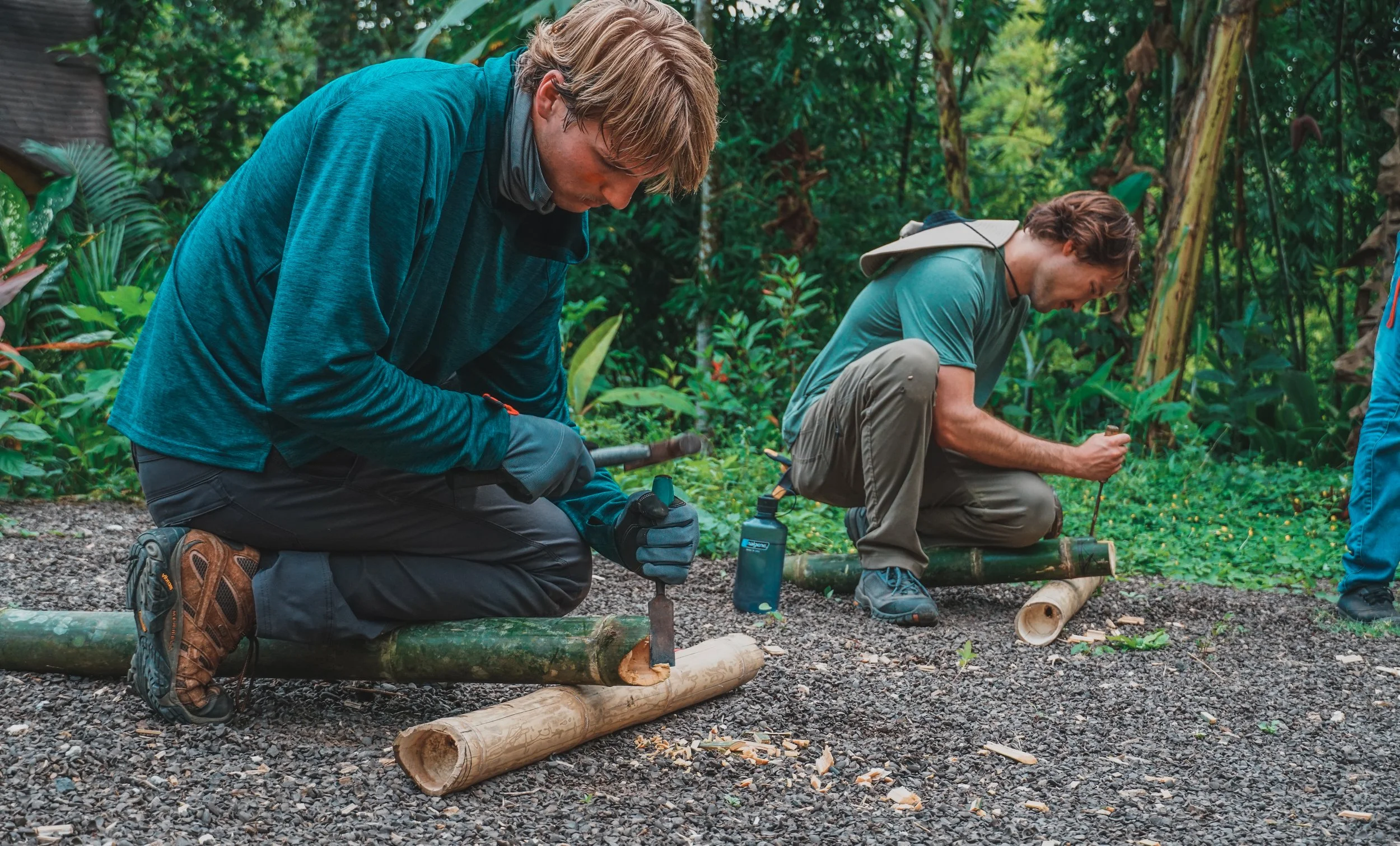
Bamboo design and fabrication
From material behavior to construction.
Cultivation, preservation, connections, fabrication, prototyping, structural applications, and builder education.
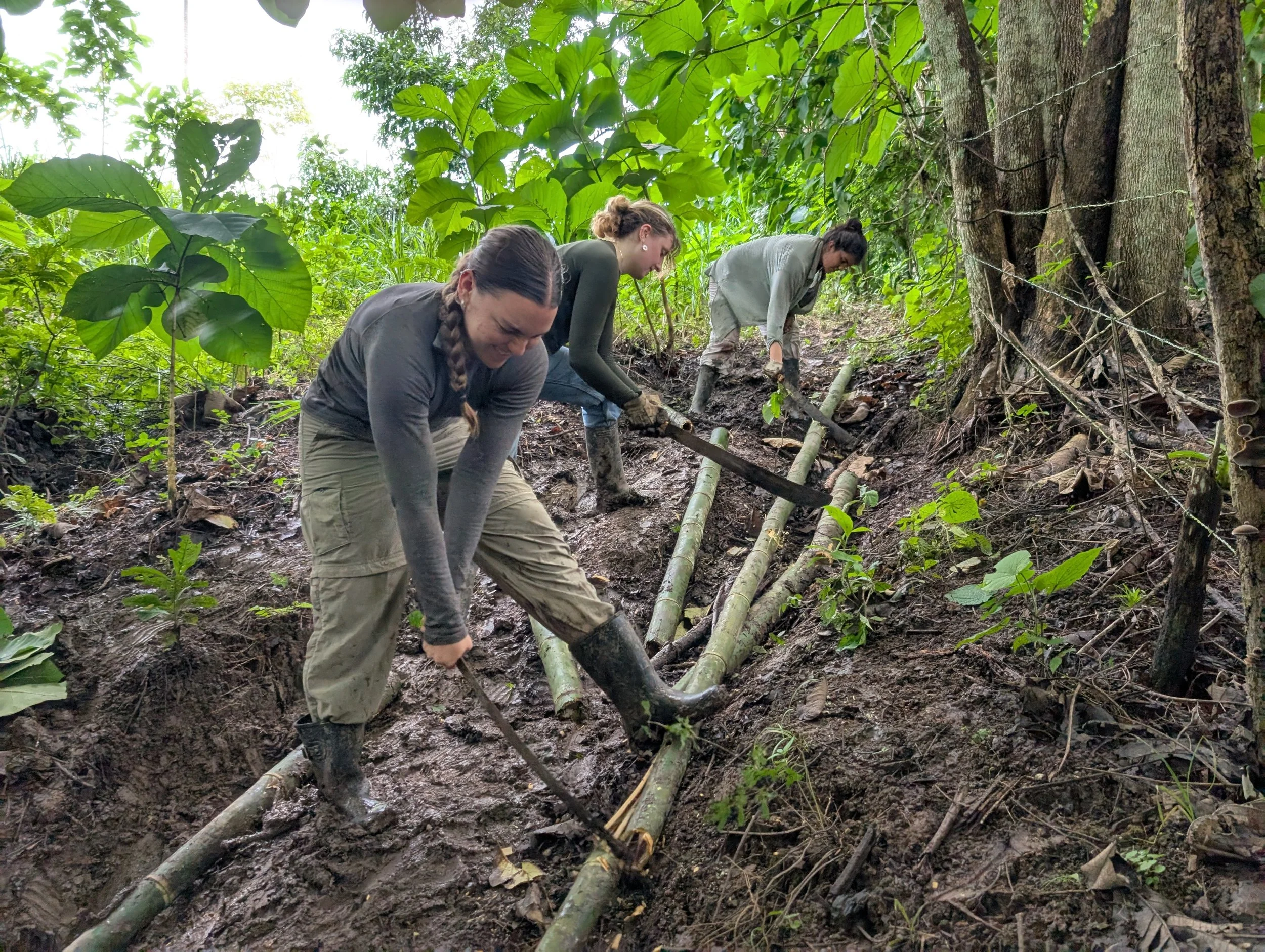
Ecology and restoration
Watersheds, habitat, and landscape observation.
Erosion control, reforestation, wildlife monitoring, habitat connectivity, and ecological recovery.
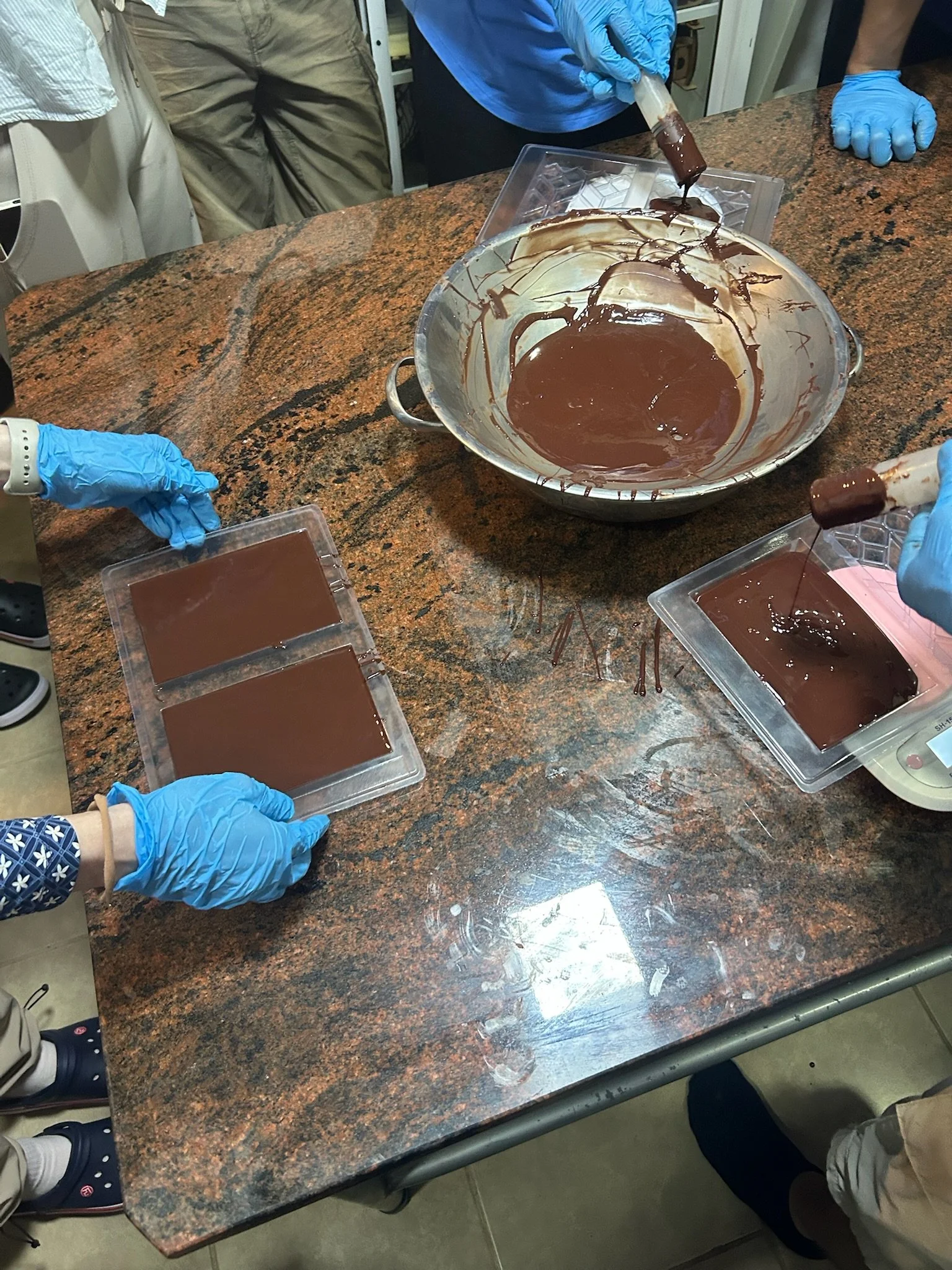
Regenerative enterprise
Connect technical work to durable livelihoods.
Value chains, local production, workforce development, project finance, and mission-driven operating models.
05 · Farmer Field School role
Field education inside a farmer-led network.
RFI contributes the educational and applied-research foundation behind the Farmer Field School. Building Carbon assembles the financing and delivery structure; participating farmers and farmer-promoters operate, adapt, and extend the work through their communities.
System design, succession, pruning, grafting, biomass management, soil, water, and field diagnostics.
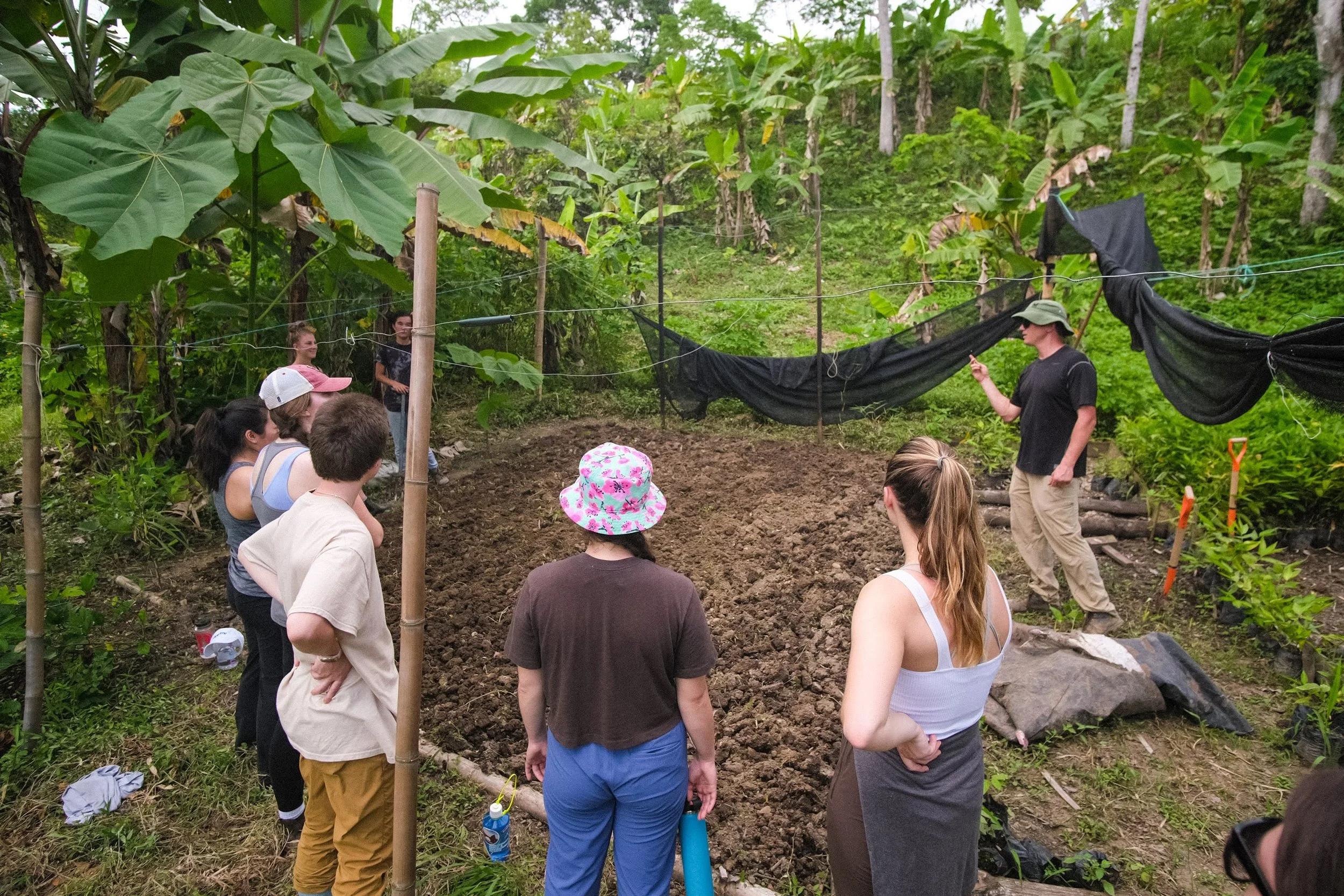
Established and developing agroforestry at Los Arboleros provides a visible basis for practical instruction.
Technicians and farmer-promoters strengthen their ability to facilitate, diagnose, and support peers.
Participant-owned plots reveal establishment constraints, management priorities, and questions for continued study.
06 · Learning network
Local practice remains the center.
RFI connects coastal Ecuadorian farmers, builders, land stewards, technical staff, university collaborators, and visiting students through shared work.
International programs expand the exchange of research, skills, and perspective, but they do not replace local knowledge or determine the agenda. Projects remain grounded in the places, practitioners, materials, and long-term relationships that allow work to continue after a course ends.
07 · Continue with RFI
Programs, projects, and current work.
This page defines RFI’s role within the shared institutional system. RFI maintains the complete record of its courses, projects, team, fellowships, and current opportunities.