EkoRural · Farmer-learning collaboration
Community agency as operating capacity.
EkoRural is an Ecuadorian organization advancing community-led agroecology through participatory planning, farmer experimentation, local leadership, agrobiodiversity, water management, food systems, and rural livelihoods.
01 · Institutional approach
People analyze, test, and lead.
Participation is not consultation after the design is finished.
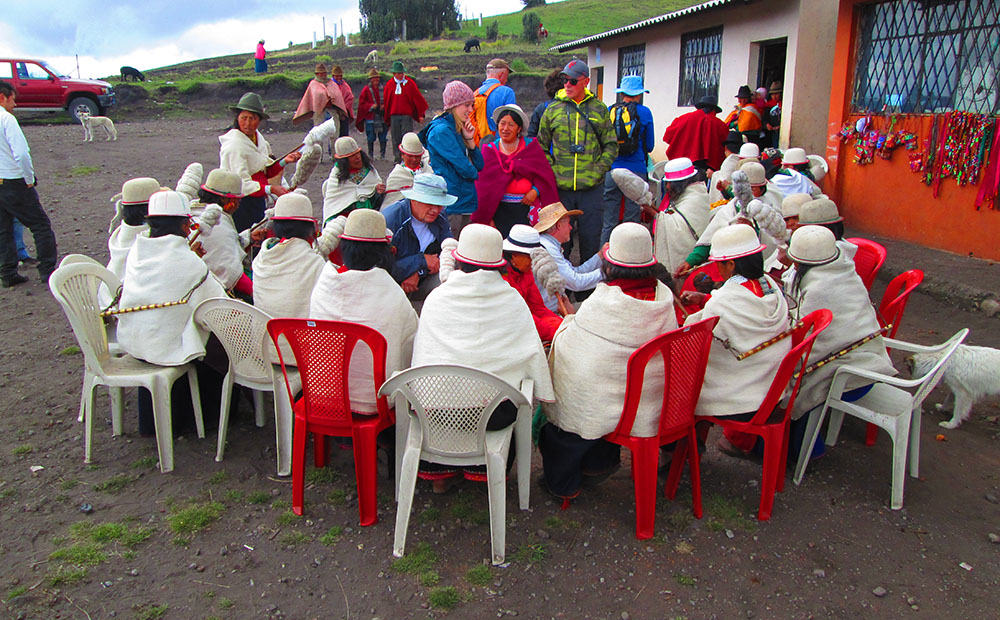
EkoRural works from the premise that durable rural development depends on the ability of people and local organizations to define priorities, examine their own conditions, test possible responses, and carry successful practices through existing community relationships.
The organization describes this as endogenous development: strengthening the capacity of rural and urban people to discover, analyze, and generate solutions. Outside technical knowledge remains valuable, but it enters a process directed by local observation, experimentation, decision-making, and adaptation.
02 · Endogenous development
Build the capacity to produce solutions.
Community-led development is not defined by the absence of outside expertise. It is defined by who develops the analysis, who makes operating decisions, and whether the capability remains after a project cycle ends.
EkoRural’s approach combines participatory planning, farmer experimentation, action-learning, local organizational capacity, documentation, and the exchange of effective practices through community leaders. Women’s leadership and the realities of household production are integral to that work.
03 · Established practice domains
Agriculture is connected to water, markets, and daily life.
EkoRural organizes its work across five interdependent domains. Together, they reflect the organization’s broader institutional experience; only documented joint activities are attributed to its collaboration with Building Carbon.
Agrobiodiversity
Local crop diversity, seed knowledge, food security, and options for climate adaptation.

Soils and landscapes
Land-management decisions considered across farm, watershed, and landscape scales.
Water management
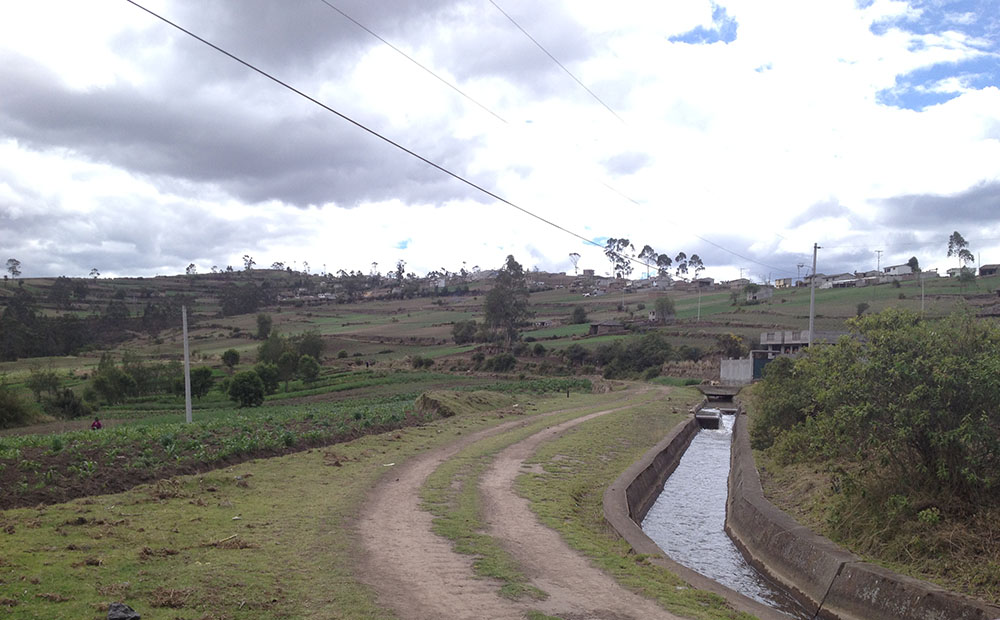
Rainwater, micro-irrigation, resource rehabilitation, and resilience to climate variability.
Local markets
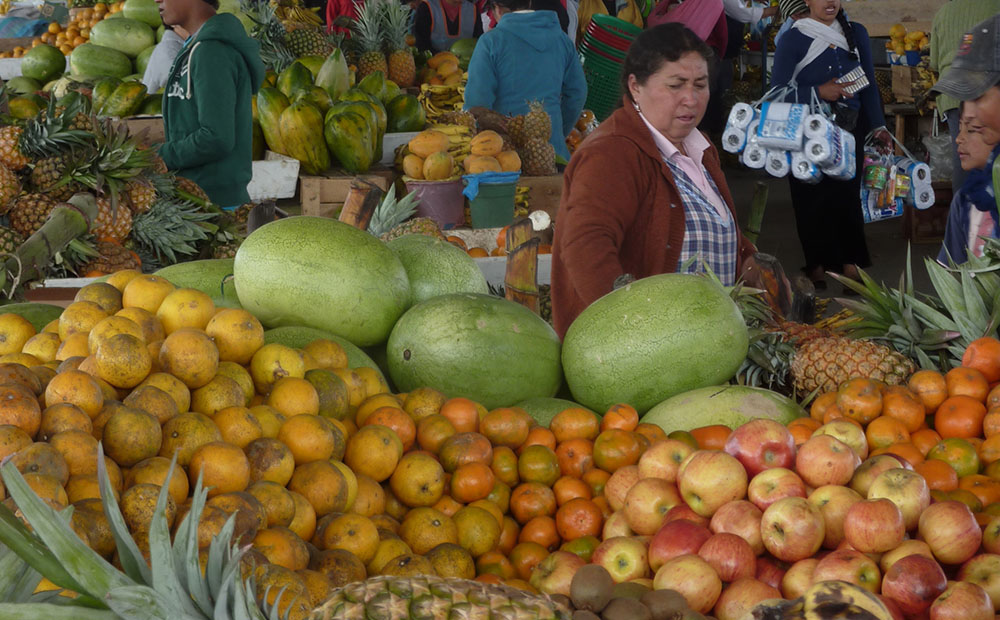
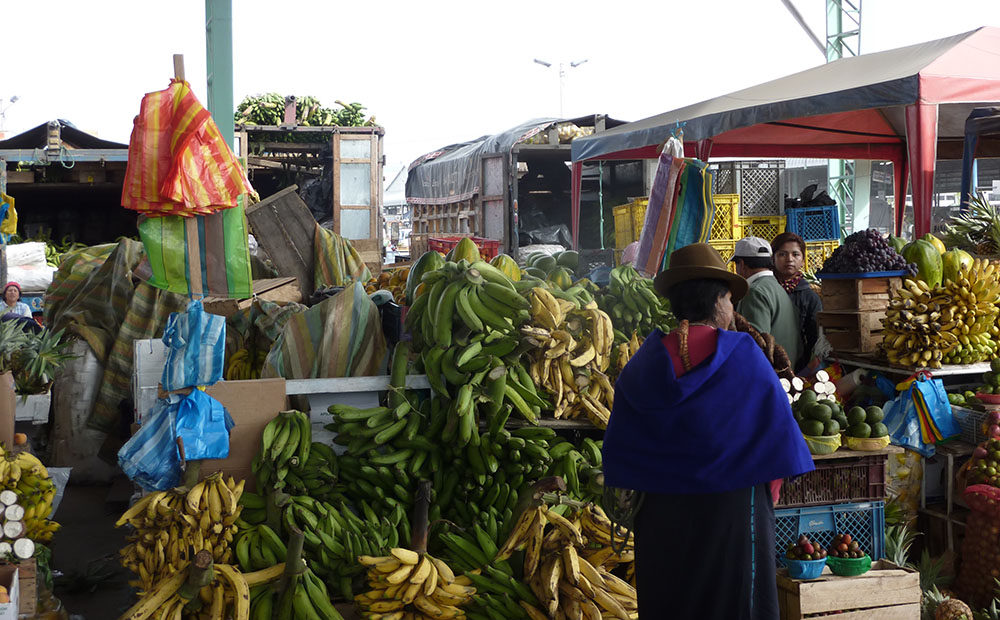
Connections among small-scale production, healthy food access, and locally rooted trade.
Livelihoods
Production, household priorities, biodiversity, local value, and income considered together.
04 · Methodological connection
Farmer-led learning across distinct regions.
EkoRural’s documented work is concentrated in Ecuador’s highlands, while the Farmer Field School operates on the coast. The collaboration is therefore grounded in transferable learning methods—not in treating distinct territories as interchangeable.
EkoRural contributes experience in farmer-training models and participatory agricultural development. Building Carbon, RFI, farmer-promoters, and local technical staff adapt the operating structure to Manabí’s climate, production systems, community relationships, and practical constraints.
Participants establish and manage their own practice plots rather than observing demonstrations alone.
Nearby farms create repeated opportunities for shared labor, comparison, diagnosis, and support.
Experienced participants convene peers, coordinate workdays, support monitoring, and extend technical exchange.
Observations from participant farms return to the curriculum, technical support, and design of future phases.
05 · Collaboration boundary
Attribution remains specific.
EkoRural’s institutional history, highland initiatives, publications, partners, and community relationships belong to EkoRural. Building Carbon presents only the methods and documented collaboration relevant to shared agroforestry work.
That distinction protects the credibility of both organizations. It identifies EkoRural’s technical contribution without implying that every EkoRural activity belongs to the Farmer Field School or that Building Carbon directs its wider work.
Read EkoRural’s complete approach06 · Knowledge and resources
Methods documented beyond a project page.
EkoRural maintains a public record of its initiatives and research across agroecology, food systems, rural organization, health, and environmental change in Ecuador.